Request a Quote
Tell us your product type, quantity, logo requirements, packaging needs, and destination country. Our team will reply within 12 hours to discuss your requirements and bulk quote.

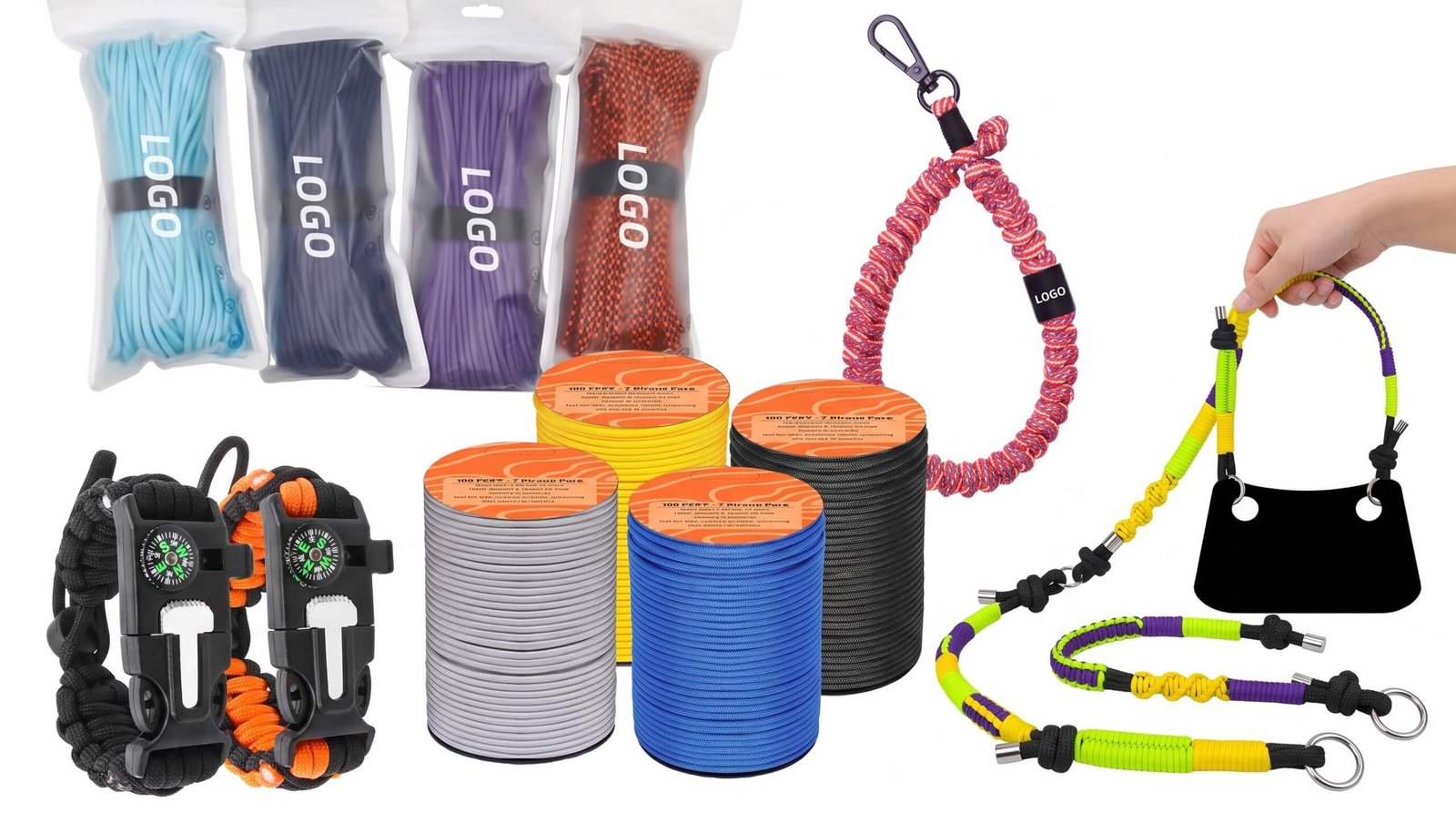
To import paracord from China, define whether you need loose cord or woven accessories, compare written specifications and quotes, approve a sample, and confirm freight and import responsibilities before ordering. Survfire’s main line is 4 mm polypropylene (PP) paracord (PP also available in 4–10 mm): colour-chart colours start from 100 ft per colour, with 1,000 ft per order in total; custom colours outside the chart start from 15,000 ft per colour. 2–3 mm polyester paracord starts from 3,000 ft per colour, and nylon paracord (4–10 mm) is custom-only from 15,000 ft per colour. Woven paracord products start from 50 pcs.
Looking for a reliable paracord manufacturer for your brand?
Compare factory pricing, MOQ options, and customization details before you commit.
No commitment · Reply within 12 hours · MOQ depends on product format
Choose paracord for the product you intend to sell: cord in measured lengths, woven bracelets, keychains or lanyards. A cord name such as “550” is not enough to establish material, test results or suitability for a finished accessory.
Compare bulk paracord from China using the same material, diameter, ordered length and packing format. A price per spool cannot be compared with a price per foot until you know how much cord each package contains. Add sample costs, freight and destination charges to the comparison instead of relying on an old headline unit price.
A written specification helps you prevent three common purchasing problems: a sample that differs from production, an unclear length or piece count, and a freight quote that excludes charges you expected to be included.
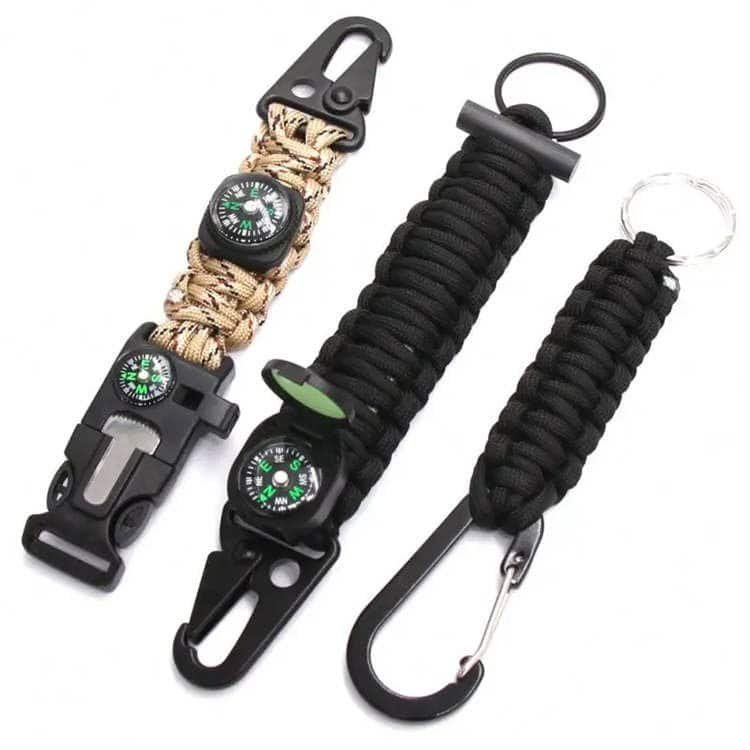
Build a shortlist around your actual product requirement. B2B platforms such as Alibaba and Made-in-China.com can help you find contacts, but a platform badge is not evidence that the quoted cord meets your specification.
Verify the business: Request the company identity, production address and relevant manufacturing information. If a supplier claims certification, check its identity and scope against the document provided.
Clarify the commercial terms: Ask for the quantity unit, payment stages, production schedule and procedure for handling discrepancies. Resolve missing or conflicting information before paying rather than using a single response time or payment percentage as proof of reliability.
Record whether the seller manufactures the goods or sources them from another factory. Ask which work is done in-house and which is subcontracted; do not assume a manufacturer can make every design or that a trading company cannot coordinate customization.
Before placing a bulk order, review a sample against the specification you will use for production. For loose cord, identify the material, diameter, color and packing length. For a woven accessory, also include finished dimensions, hardware and branding.
Request the sample scope and confirm any product, customization and shipping charges in writing. Agree which colors, components and packaging the sample represents. Do not assume that a sample fee is refundable or that freight is included. Samples ship within 7 working days. Transit time is additional.
When samples arrive, perform these hands-on checks:
Record observations against the agreed specification and keep the approved reference. If a required property has not been demonstrated, request suitable evidence rather than treating appearance or hand feel as a test result.
Use a QC checklist that matches the product and claims in your purchase specification. Specify what will be inspected, how the sample will be selected and what counts as acceptance.
1. Color consistency: Agree the color reference and the conditions used for comparison. Ask how production will be compared with the approved sample and how a visible mismatch will be handled.
2. Performance evidence: If breaking strength is a purchasing requirement, agree the value, test method and evidence before ordering. Check that the report identifies the relevant product and construction.
3. Cord construction: Compare sheath, inner construction, material and diameter with the agreed specification. Record the required construction instead of assuming one universal core count for every product marketed as 550 paracord.
4. Length and quantity: Define how cord length and finished pieces will be measured and counted. Agree any allowed tolerance in the order; do not substitute an unsupported industry-wide percentage.
5. Packaging and labeling: Confirm that retail-ready packaging matches your specifications: barcode placement, polybag quality, box dimensions, and any private-label branding.
Keep inspection records, photographs and the approved reference with the order documents. If you require independent inspection, confirm access, scope, timing and cost with the supplier and inspector in advance.
Use an agreed Incoterms® 2020 rule and a precise named place or port in the quotation. The rule allocates delivery responsibilities, costs and risk; it does not establish product quality or replace the rest of the purchase contract. The ICC Incoterms guidance explains the framework.
EXW: The seller makes the goods available at the agreed place; the buyer takes on loading, transport and export/import formalities. Confirm that your logistics partner can carry out those tasks for the route. A lower product-only quote does not establish a lower delivered cost.
FOB: This rule is for sea or inland waterway transport, with delivery and risk transfer when the goods are on board the vessel at the named shipment port. The buyer arranges the main carriage and import formalities. Ask the forwarder whether FOB fits the actual handover, especially for containerized shipments; it is not an express-courier term.
DDP: The seller arranges carriage and export/import clearance, including import duties, to the named destination, with goods ready for unloading. DDP does not itself require the seller to buy cargo insurance. Confirm the agreed rule, destination, insurance arrangement and included charges; Survfire’s ferrocerium-only DDP policy does not establish paracord shipping terms.
Ask the forwarder to assess the actual paracord shipment, packaging, destination and route before choosing courier, air or sea freight. Do not assume a carrier accepts every order or use a fixed delivery estimate for all destinations. If an order also includes ferro rods or other kit contents, assess those items separately. Survfire’s ferrocerium fire starters contain more than 10% iron and qualify for the applicable conditional transport exemption; they are shipped as non-dangerous goods under that exemption. This does not establish the classification of every kit component or every supplier’s product.
Separate sample dispatch, bulk production, freight transit and import clearance in the schedule. Ask for a route-specific estimate and identify which stages are confirmed and which remain estimates.
Bulk production: Survfire’s standard bulk production lead time is 7–15 working days. Ask for the schedule for your quantity, specification and customization before placing the order.
Sample dispatch: Samples ship within 7 working days. Transit time is additional. Allow for receipt, review and any agreed changes before finalizing the bulk order.
Freight transit: Request a current estimate for the actual destination and shipment. Compare the options with these questions:
Import clearance: Ask your customs broker or logistics provider which documents and destination requirements apply. Confirm the product description, material, quantity and invoice details before dispatch.
Work backward from the date you need goods available for sale, including receipt and inspection at the destination. Ask what happens if production or transit changes.
Send one product brief to each supplier so you can compare like-for-like quotes. Include the following information:
Product specification: Loose cord or finished accessory; material; diameter; cord length or finished dimensions; inner construction; and any performance requirement. Attach a drawing or reference photograph where measurements could be interpreted differently.
Color and finish: Identify an existing color-chart selection or an outside-chart custom color. Provide a physical reference or color standard where needed, and agree how it will be checked.
Packaging requirements: Spool type, inner polybag, outer carton dimensions, labeling, and barcode placement.
Quantity and MOQ: State feet for loose cord and pieces for woven products, with the required colors and packing format. Survfire’s main line is 4 mm polypropylene (PP) paracord (PP also available in 4–10 mm): colour-chart colours start from 100 ft per colour, with 1,000 ft per order in total; custom colours outside the chart start from 15,000 ft per colour. 2–3 mm polyester paracord starts from 3,000 ft per colour, and nylon paracord (4–10 mm) is custom-only from 15,000 ft per colour. Woven paracord products start from 50 pcs.
Quality requirements: List the properties you need, how they will be checked and the acceptance criteria. If a buyer or market requires a particular standard, identify its version and request evidence for the actual product. Do not label ordinary commercial cord as military-specification solely from its name or appearance.
Timeline: Your desired delivery date, working backward to calculate when production must start.
Samples: Request production samples before full run and finished samples before shipment.
Keep the agreed specification, quote, payment terms, inspection plan and delivery responsibilities in writing. Ask the supplier to confirm changes.
Need help choosing the right paracord style for your market?
Get a custom quote based on your quantity, size, and packaging needs.
Custom logo & packaging · We have ISO 9001 certification · Ask about sample scope and costs
Survfire manufactures paracord and woven accessories in Jiangmen, Guangdong, China, serving B2B buyers since 2010. The factory has annual paracord capacity of approximately 15.7 million feet. We have ISO 9001 certification.
For cord, identify your color-chart choice, diameter, material and packing length. For bracelets, keychains or lanyards, add finished dimensions, hardware, logo placement and packaging.
Survfire’s main line is 4 mm polypropylene (PP) paracord (PP also available in 4–10 mm): colour-chart colours start from 100 ft per colour, with 1,000 ft per order in total; custom colours outside the chart start from 15,000 ft per colour. 2–3 mm polyester paracord starts from 3,000 ft per colour, and nylon paracord (4–10 mm) is custom-only from 15,000 ft per colour. Woven paracord products start from 50 pcs. Request pricing for your specification and packing format; the unit price and any branding charges need a current written quote.
Survfire provides Amazon FBA prep such as FNSKU labeling and carton preparation for sellers using Amazon fulfillment centers. Provide your shipment requirements and confirm the scope, cost and shipping arrangement in the quote. This preparation service does not mean Survfire performs Amazon’s warehouse fulfillment. We reply within 12 hours to discuss your requirements and bulk quote.
If your order combines paracord with fire starters, identify the quantities and packing for each product separately. Survfire ships ferrocerium fire starters on DDP terms only, with import duties included in that quote. Confirm paracord logistics independently; do not extend the ferrocerium policy to the whole order without agreement.
Contact them at support@survfire.com or visit www.survfire.com to start your sourcing journey.
Check that each quote refers to the same loose-cord length or finished-product design. Record material, diameter, construction, dimensions and hardware.
Compare ordered quantity, units and packing. Ask for the package contents and carton dimensions that the freight calculation will use.
Compare sample charges, branding, packing, freight and destination charges as separate lines. Identify which costs are included in the quote and which you will pay elsewhere.
Compare the approved sample reference, inspection scope and evidence for product claims. Ask how a failed inspection will be handled and who decides whether the goods can be shipped.
Compare dispatch dates, transport estimates and the named delivery point. A quote ending at the shipment port differs from one ending at your warehouse.
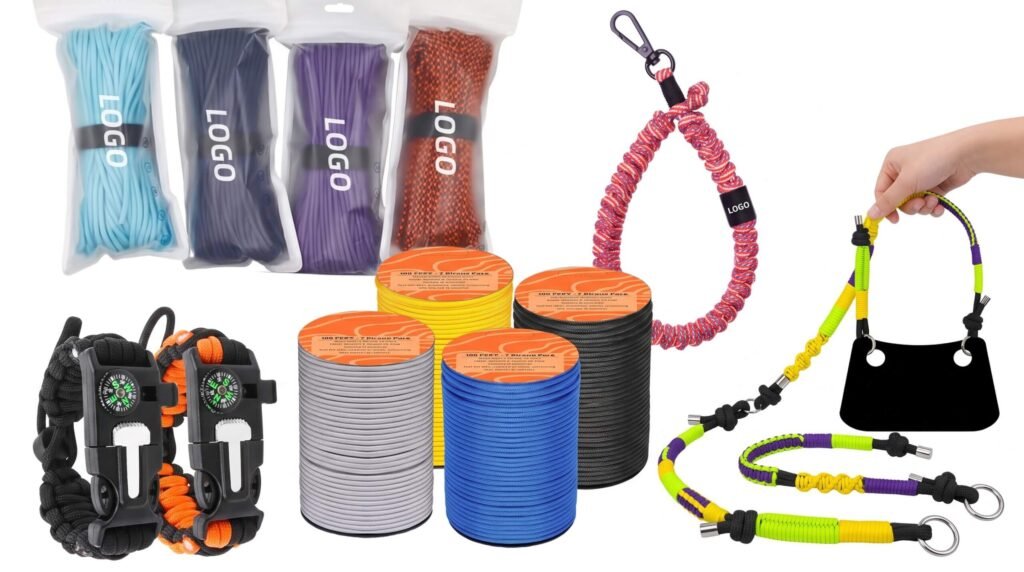
Q: What is the minimum order quantity when importing paracord from China?
A: Survfire’s main line is 4 mm polypropylene (PP) paracord (PP also available in 4–10 mm): colour-chart colours start from 100 ft per colour, with 1,000 ft per order in total; custom colours outside the chart start from 15,000 ft per colour. 2–3 mm polyester paracord starts from 3,000 ft per colour, and nylon paracord (4–10 mm) is custom-only from 15,000 ft per colour. Woven paracord products start from 50 pcs. Confirm the quantity unit and packing format in the quote; other suppliers may set different minimums.
Q: Do I need a special licence to import paracord?
A: Import requirements depend on the destination, material and product form. Confirm tariff classification, documentation and any applicable licence or other requirements with your customs broker. Ask the carrier to assess the actual shipment before booking.
Q: How long does production take after I approve the sample?
A: Survfire’s standard bulk production lead time is 7–15 working days. Confirm the schedule for your quantity, specification and customization in the quote. Production time is separate from freight transit and import clearance.
Q: How do I check quality before shipment?
A: Compare the goods with the approved specification and sample. Check color, construction, length or piece count, packaging and any agreed performance evidence. If you require third-party inspection, confirm its scope, access, timing and cost before dispatch.
For finished bracelets, keychains and lanyards, use our custom paracord products OEM guide to prepare the product specification before requesting a quote.
To import paracord from China, use one specification for supplier comparison, approve the sample, define QC acceptance and confirm the delivered cost and schedule. Keep loose cord and finished accessories separate when comparing MOQ and units. Check import and transport requirements for the actual goods and destination.
Use our paracord manufacturing page to prepare an enquiry and our private label page for branding requirements. For regional supplier research, see the Canada paracord supplier guide; verify each supplier’s current terms before ordering.
Keep the accepted quote, approved sample and inspection records together. Bring unresolved questions to the supplier before committing to bulk production.
Ready to source bulk paracord?
Tell us your target quantity, product style, and packaging requirements.
We’ll reply within 12 hours to discuss your requirements and bulk quote.
We have ISO 9001 certification · Direct factory pricing · Custom OEM available