Request a Quote
Tell us your product type, quantity, logo requirements, packaging needs, and destination country. Our team will reply within 12 hours with MOQ, pricing, lead time, and shipping options.
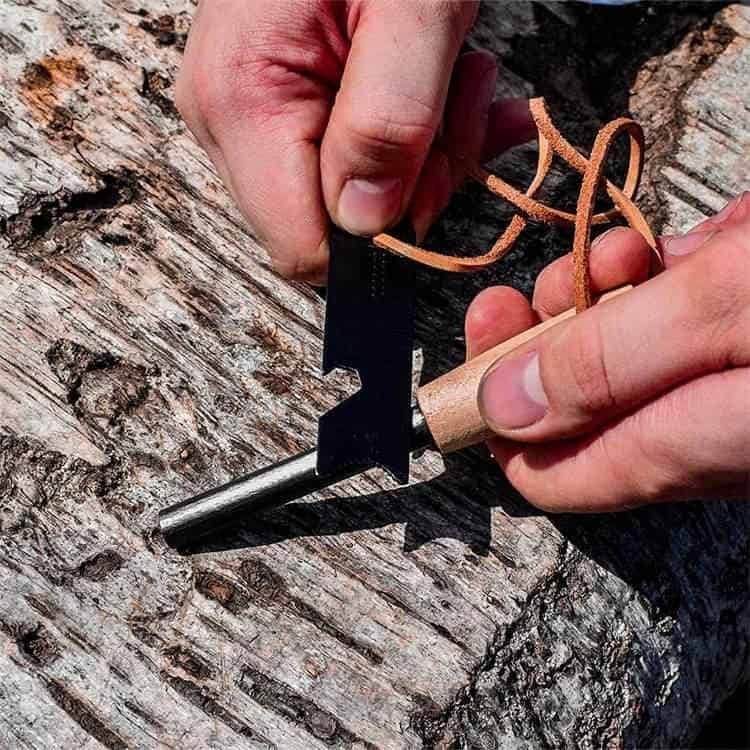
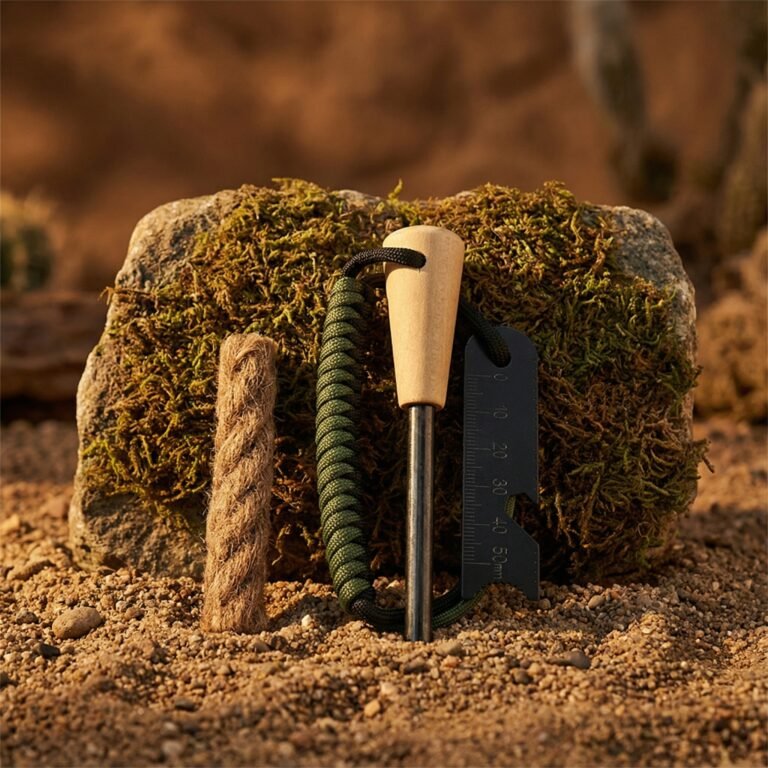
Have you ever looked at a simple ferro rod fire starter and wondered how scraping a piece of metal can produce a torrent of sparks hot enough to ignite tinder in the rain? The answer lies not in magic, but in a remarkable invention of modern chemistry. Inside that unassuming rod is a material engineered to produce fire on demand. This article will dive deep into the heart of this essential survival tool, exploring the exact composition, fascinating history, and fiery mechanics of the ferro rod.
Looking for a reliable ferro rod manufacturer for your brand?
Compare factory pricing, MOQ options, and customization details before you commit.
No commitment · Reply within 12h · MOQ from 50 pcs
First, let’s clear a common misconception. What we often call a “flint” in modern fire-starting kits is not the hard, quartz-based rock used historically. Instead, it is a manufactured alloy known as ferrocerium. This synthetic material is what makes the ferro rod such a reliable and powerful fire starter.
Ferrocerium is classified as a pyrophoric alloy, meaning it produces sparks when struck because its fragments ignite spontaneously in air at relatively low temperatures. The “ferro” in its name comes from iron (Latin: ferrum), while “cerium” points to its primary active component, a rare-earth element.
The ferrocerium alloy was invented in 1903 by the Austrian chemist Carl Auer von Welsbach. His innovation was a game-changer, creating a consistent and highly effective spark-producing material. He discovered that by combining iron with purified cerium, an element found in tailings from thorium mining, he could create an alloy that was both brittle and had a remarkably low ignition temperature. This discovery paved the way for the modern ferro rod firestarter.
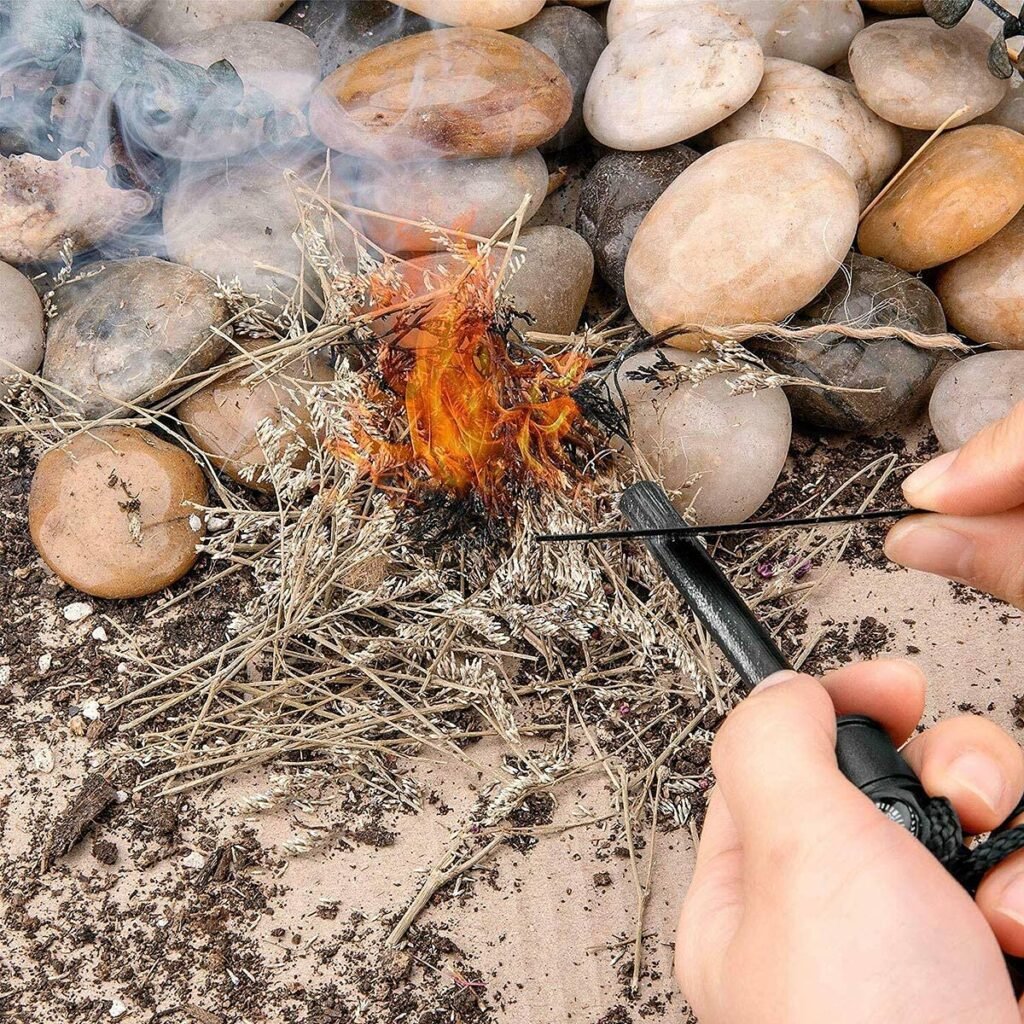
So, what exactly is inside? A modern ferro-rod is not just iron and cerium. It is a complex blend of metals designed to optimize spark production, durability, and burn temperature. The base of most alloys is mischmetal, a naturally occurring mixture of rare-earth elements.
Here is a breakdown of a typical contemporary ferrocerium composition for a fire starter rod:
| Component | Approximate Percentage | Primary Role |
|---|---|---|
| Cerium (Ce) | 41.8% | The primary sparking agent. It has an incredibly low ignition temperature between 150–180°C (302–356°F). |
| Lanthanum (La) | 24.2% | Helps produce brighter sparks and modifies the alloy’s properties. |
| Iron (Fe) | 20.8% | Provides structural integrity and the “ferro” namesake. Hardens the alloy. |
| Magnesium (Mg) | 4.4% | Added to increase the spark temperature and flare. Often included as an oxide to harden the rod. |
| Neodymium (Nd) | 4.4% | A trace lanthanide that contributes to the alloy’s characteristics. |
| Praseodymium (Pr) | 4.4% | Another trace lanthanide that modifies the spark and processing traits. |
Manufacturers may tweak these ratios and add other metal oxides (like iron oxide) to adjust hardness, spark intensity, and burn duration. A harder rod may last for thousands of strikes but produce slightly fewer sparks per scrape, while a softer rod throws a massive shower of sparks but wears down faster.
Understanding the ingredients is only half the story. The real wonder is how they work together with your ferro rod striker to create fire. The process is a perfect demonstration of physics and chemistry in action:
It’s important to note the role reversal from ancient techniques. In traditional flint-and-steel, a hard flint rock strikes particles of iron from a steel striker, and those iron particles ignite. With a ferro rod, the roles are switched: the hard steel striker is used to shave off particles of the softer ferrocerium rod. The ferro rod itself is the consumable spark material.
This fundamental process, transforming solid alloy into ignited particles through kinetic energy, is what sets the modern ferro rod fire starter apart from all primitive fire-making methods. Unlike a traditional lighter that relies on a finite fuel source or matches that consume themselves, the ferro rod is a model of efficient energy conversion: the simple, forceful motion of your arm is directly converted into intense thermal energy. This also explains its unparalleled reliability in adverse conditions. Because the sparks are literally burning pieces of metal, they are not easily extinguished by wind or a light drizzle. A ferro rod striker scraping effectively will cast these molten sparks forward, allowing you to aim them precisely where needed. Understanding this conversion from mechanical action to controlled fire is key to mastering not just how to use a ferro-rod, but why it is consistently rated as the most dependable fire starter for serious outdoor enthusiasts and survivalists.
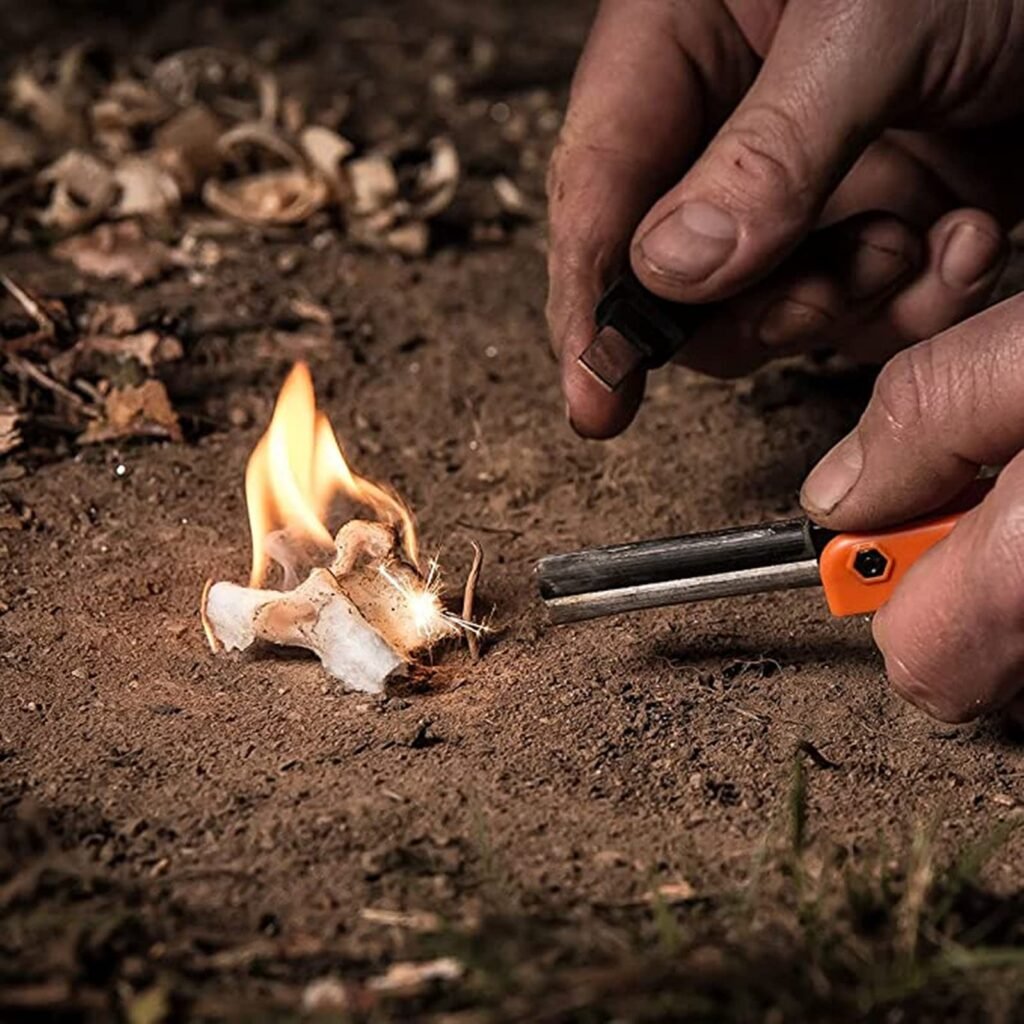
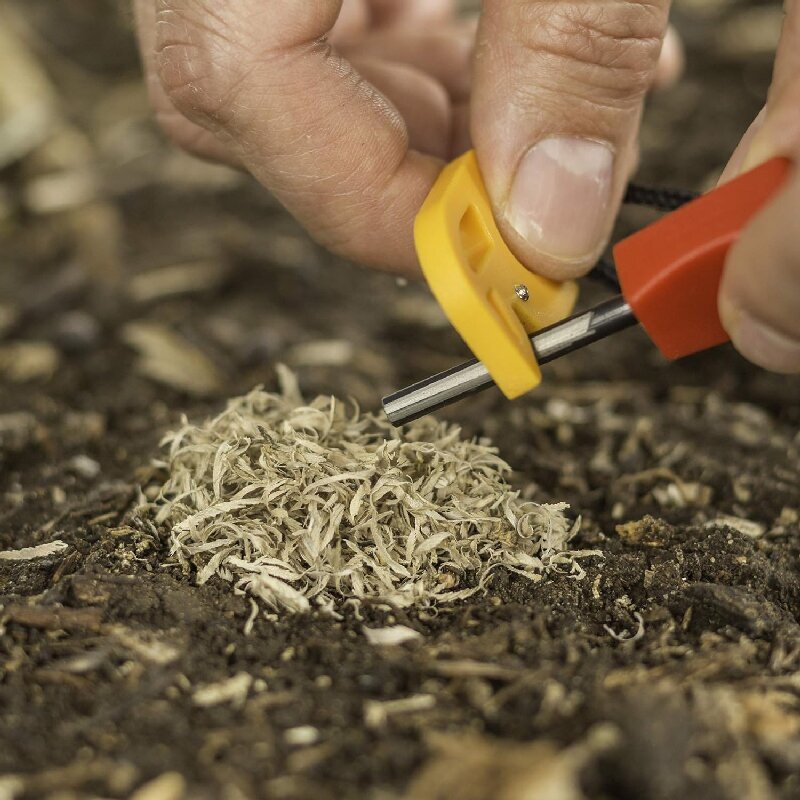
The rod itself is only one half of the equation. The ferro rod striker is a crucial and often overlooked component. For optimal performance, the striker should be made of high-carbon steel. This material is hard enough to effectively scrape the alloy from the rod. Using the spine of your knife can work, but dedicated strikers are often designed with a sharp, 90-degree edge to maximize the amount of material scraped off with each stroke.
A proper striker, held firmly, allows you to direct the shower of sparks precisely into your tinder bundle. Some advanced survival tool designs even integrate the striker and rod into a single, ergonomic unit to improve spark direction and prevent scattering the tinder pile.
The synergy between the rod and a proper ferro rod striker is where theory meets practice. While the ferro rod contains the potential for fire, the striker is the key that unlocks it. This relationship underscores a critical principle: the reliability of your entire fire starter system depends on the quality and correct use of both components. An understanding of the rod’s pyrophoric alloy explains why sparks are created, but mastering the striker determines how effectively those sparks are delivered to your tinder. It transforms the simple act of scraping into a controlled, repeatable technique for generating a concentrated spark shower. This perfect partnership is what ultimately fulfills the promise of the ferro rod’s ingenious internal design, ensuring that the sophisticated science encapsulated within the alloy translates directly into a practical, life-sustaining flame.
Knowing its inner workings explains why the ferro rod is a cornerstone of survival kits and the 10 Essentials. Its advantages are rooted in its composition:
Therefore, the well-documented advantages of the ferro rod, its weather resistance, longevity, and intense heat, are not merely convenient features; they are the direct and logical consequences of its internal chemistry and physical design. Knowing what exactly is inside a ferro rod transforms it from a simple backup into a predictable and masterable tool. This knowledge allows you to trust its performance in a downpour because you understand the pyrophoric nature of cerium. It lets you maximize its thousands of strikes because you appreciate how the iron alloy provides durable structure. Ultimately, the ferro rod fire starter earns its title as the “ultimate” not just through a checklist of attributes, but because its entire existence is a focused application of materials science to solve the ancient problem of creating reliable fire. This seamless integration of purpose, design, and science is what sets it apart in the world of survival gear.
The next time you pick up a ferro rod firestarter, you’ll know you’re holding more than a simple tool. You’re holding a carefully engineered pyrophoric alloy, a testament to early 20th-century innovation that combines rare-earth metals like cerium and lanthanum with iron to create a predictable and potent source of ignition. Its internal composition is designed for one perfect purpose: to surrender a storm of molten-hot sparks when scraped, giving you the power to create fire in almost any condition.
Looking to source high-quality ferro rods that resist rust?
All Survfire ferro rods feature a factory-applied anti-oxidation coating for longer shelf life and better retail presentation. MOQ 50 pcs, private label options available, DDP shipping worldwide.
Ready to source bulk ferro rods?
Tell us your target quantity, product style, and packaging requirements.
we’ll send you a detailed bulk quote within 12 hours.
ISO 9001 certified · Direct factory pricing · Custom OEM available