Request a Quote
Tell us your product type, quantity, logo requirements, packaging needs, and destination country. Our team will reply within 12 hours with MOQ, pricing, lead time, and shipping options.
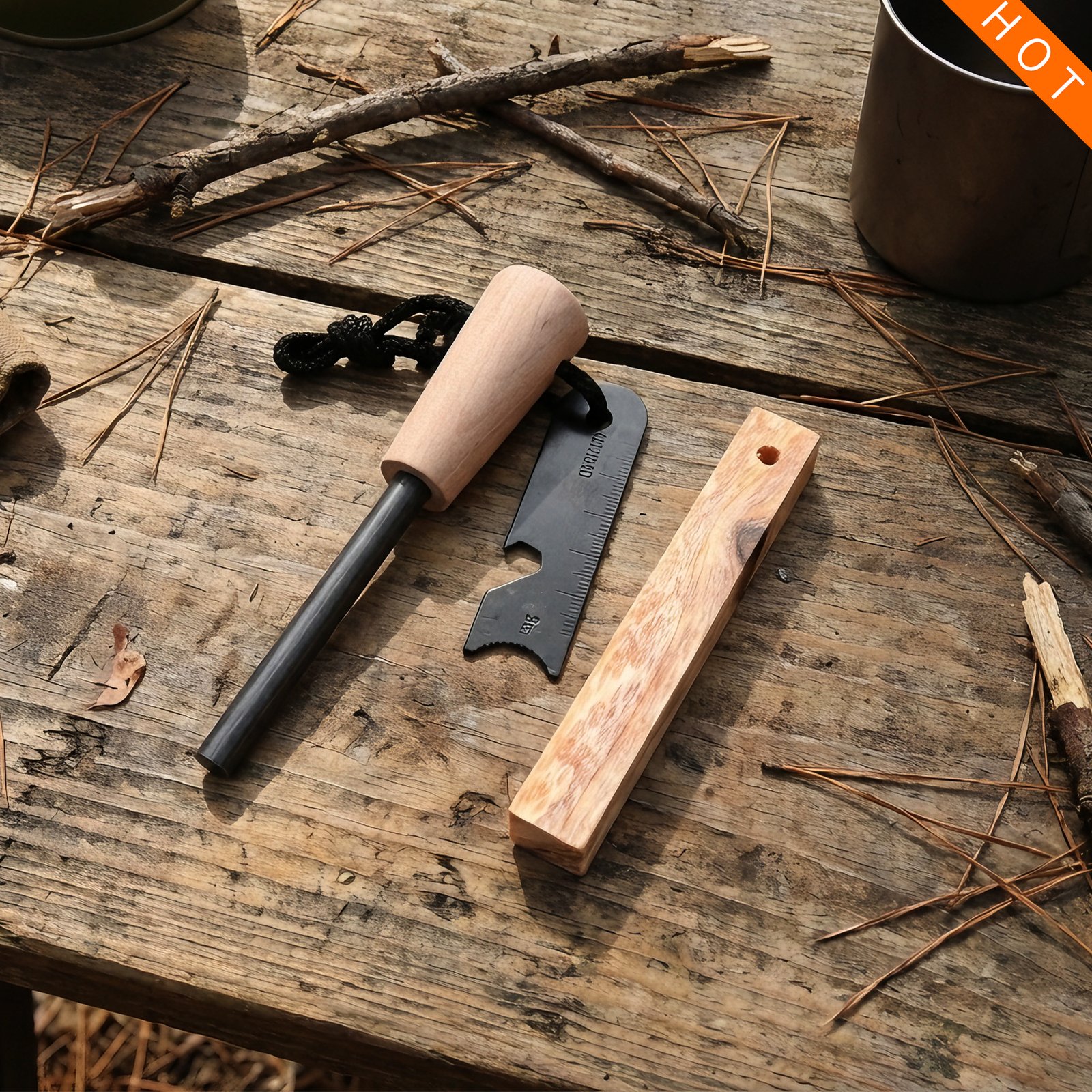
In the world of outdoor preparedness, few debates are as persistent as the quest for the perfect fire starter. At the heart of this discussion lies a critical question for every survivalist, hiker, and bushcrafter: Is a ferro rod better than a lighter for survival?
The answer isn’t a simple yes or no. It’s a nuanced analysis of reliability, skill, and situational awareness. This guide will dissect both tools across the metrics that matter most when your well-being depends on a flame.
Looking for a reliable ferro rod manufacturer for your brand?
Compare factory pricing, MOQ options, and customization details before you commit.
No commitment · Reply within 12h · MOQ from 50 pcs
To judge the battle, you must know the fighters.
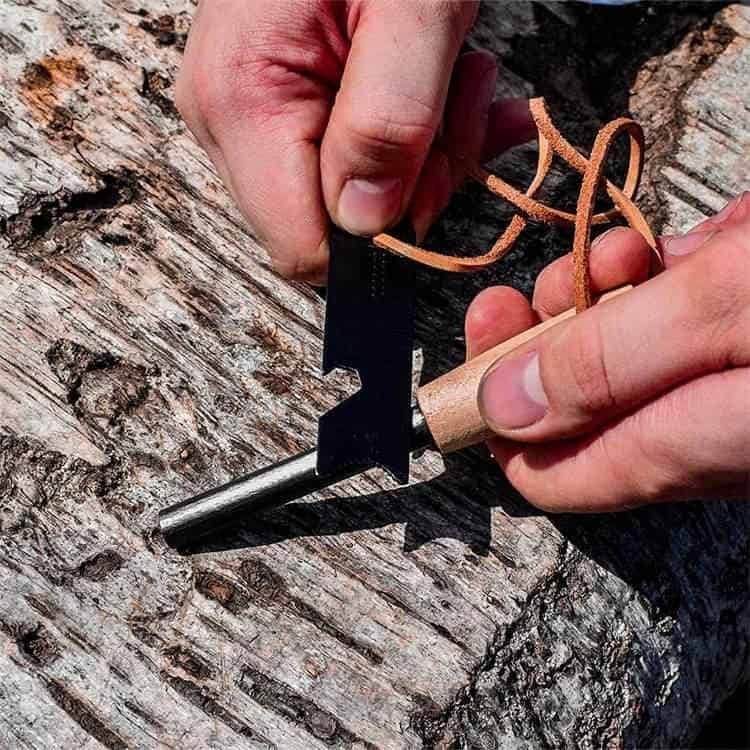
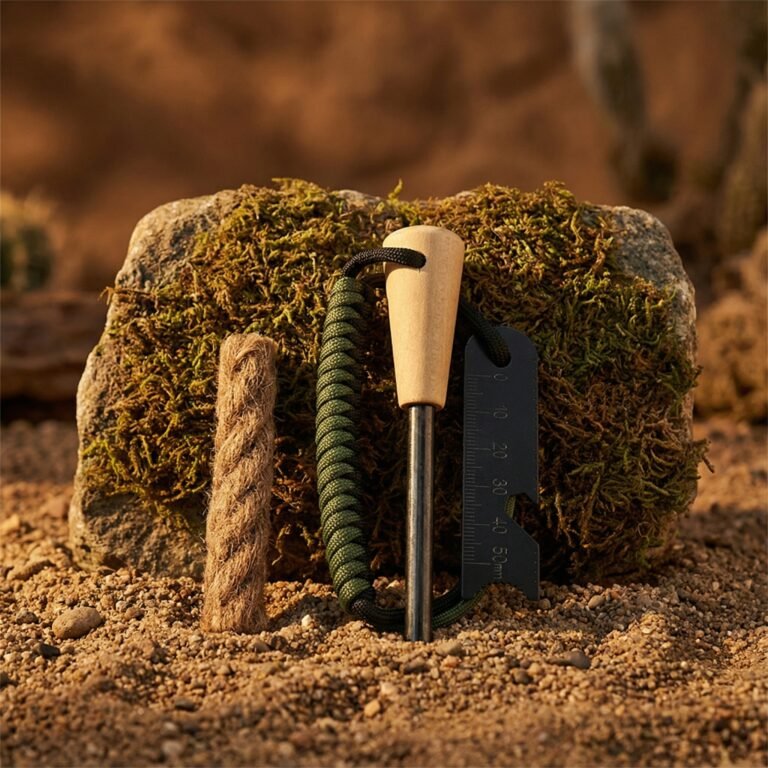
The Ferro Rod (Ferrocerium Rod): Often called a ferro rod fire starter or ferro rod firestarter, this is a man-made alloy of rare-earth metals like cerium, lanthanum, and iron. Its genius lies in its pyrophoric quality: when scraped with a hard, sharp edge, it shaves off tiny pieces that ignite spontaneously in air, producing a torrent of incredibly hot sparks (approx. 3,000 °C / 5,432 °F). A complete ferro rod fire starter kit consists of the rod itself and a hardened ferro rod striker, typically made of high-carbon steel. It operates on pure physics, requiring no fuel, fluid, or complex mechanics.
The Lighter: From disposable plastics to refined metal windproof models, lighters rely on controlled chemical combustion. They use a spark (from a flint wheel or piezoelectric crystal) to ignite a released fuel, usually butane. Their operation depends on a sealed fuel reservoir, a precise valve system, and a consistent ignition mechanism.
From their inception, their philosophies diverge: the ferro-rod is a lesson in fundamental, friction-based fire making, while the lighter is a marvel of convenient, on-demand combustion.
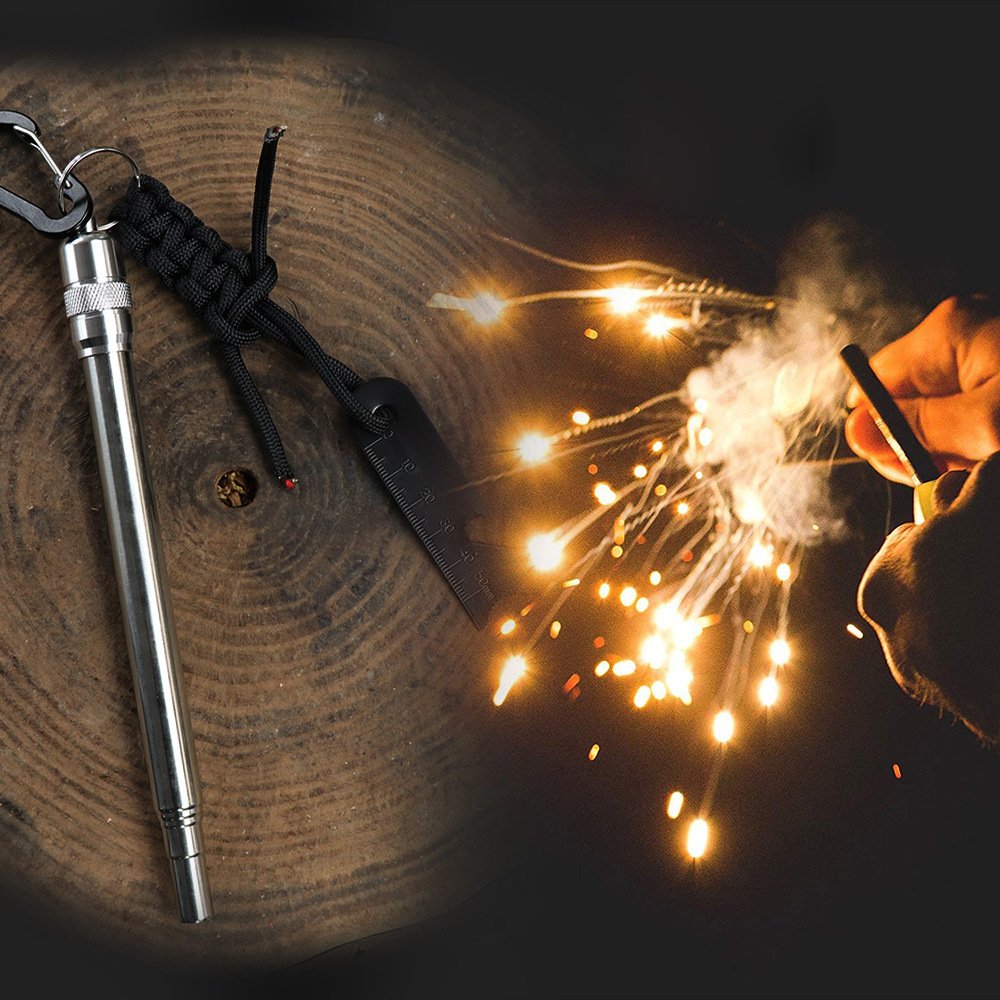
In a true survival scenario, your gear must work against the elements. Here’s how they stack up.
1. Performance in Wet & Humid Conditions
This is the ferro rod’s most decisive victory. Even if submerged, a quick shake and a firm scrape will produce a shower of sparks. Water cannot penetrate or disable its core function.
Most lighters, however, fail when wet. While some are water-resistant, flooded ignition systems or saturated flints render them useless. A ferro rod firestarter is the definitive choice for rainy climates, river crossings, or unexpected immersion.
2. Function in Extreme Cold & High Altitude
Cold temperatures cause the liquefied gas in lighters to vaporize poorly, leading to weak or non-existent flames. Altitude can also affect pressure dynamics.
A ferro rod is virtually impervious to cold. Its sparks burn just as hot at -20°C as they do at 20°C. When fine motor skills diminish from the cold, the gross motor action of scraping a rod is more reliable than manipulating a small lighter button.
3. Longevity & Shelf Life
A standard-sized ferro rod fire starter (e.g., 1/2″ x 6″) can produce thousands of strikes. It doesn’t have a “shelf life”; it merely gets shorter. That last nub can still spark.
A lighter has a finite life dictated by its fuel capacity. Once empty, it becomes dead weight. For long-term or uncertain-duration scenarios, the ferro-rod’s endurance is a major advantage.
4. Durability and Fragility
A ferro rod is a solid piece of metal. It can survive drops, crushes in a pack, and general rough handling. Its ferro rod striker is equally tough.
Lighters, especially disposable ones, are fragile. Plastic can crack, the ignition wheel can break, or the valve can be damaged, rendering the entire unit inoperable.
Round 1 Verdict: For raw, unwavering reliability against environmental hostility, the ferro rod wins conclusively. It is the ultimate backup fire starter.
Survival isn’t just about gear; it’s about the user.
Speed and Convenience
For daily tasks, the lighter is king. It’s a one-handed, near-instantaneous flame perfect for lighting stoves, candles, or dry kindling.
Using a ferro rod requires preparation: gathering or preparing high-quality tinder, assuming a stable stance, and executing a proper scraping technique. This process takes time and practice.
The Learning Curve
This is the philosophical core of the debate.
Round 2 Verdict: The lighter offers unmatched convenience for 99% of daily life. The ferro rod transforms fire-making from a consumable commodity into a replicable, dependable core survival skill. Your proficiency with it is a resource that cannot be depleted.
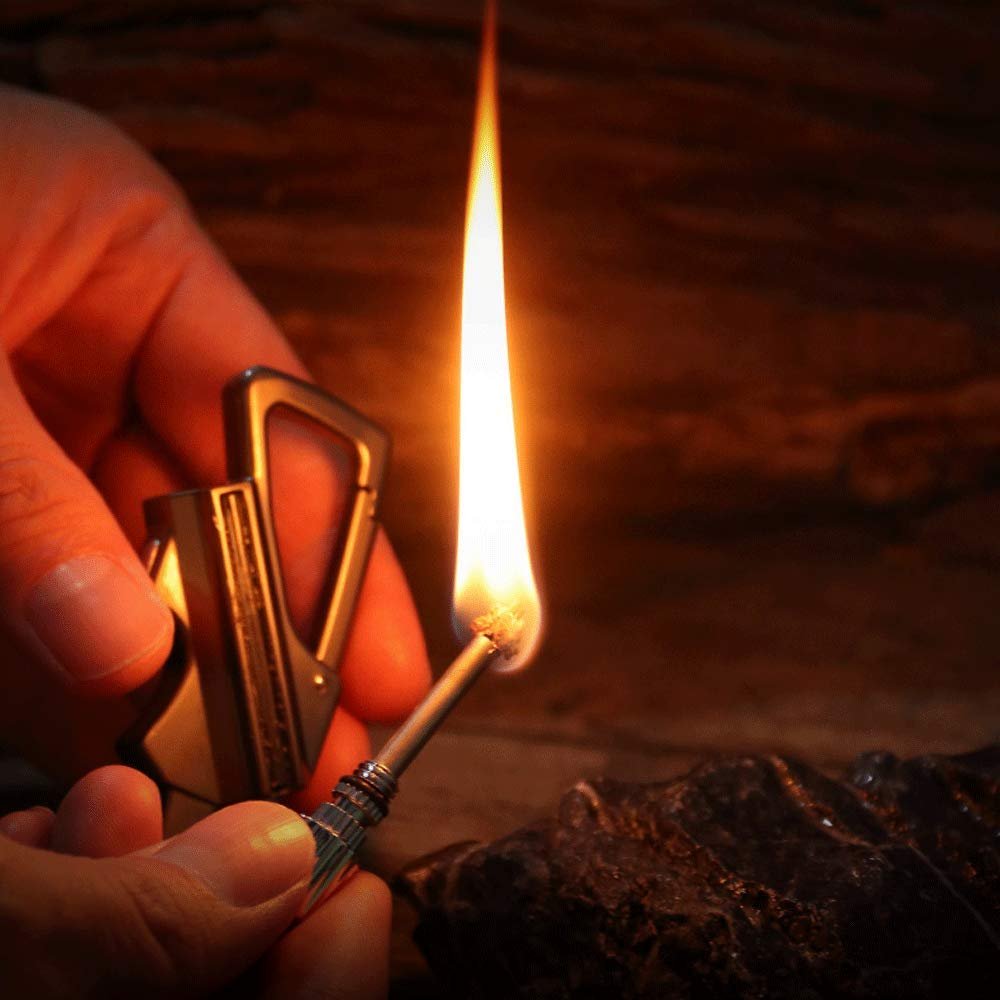
True survival wisdom is leveraging gear for multiple uses.
The Ferro Rod System:
The Lighter:
The ultimate advantage in survival is not rigid loyalty to one tool, but the cognitive flexibility to use the best one for the immediate challenge. This is where understanding both implements creates a powerful synergy. Your ferro rod firestarter is your guarantor of opportunity, it ensures that a spark is always possible, even when conditions seem impossible. Your lighter is your conductor of efficiency, it conserves precious calories and mental focus by providing quick flame for established tasks. In practice, this might look like using your lighter’s flame to carefully pre-dry a piece of marginal tinder, then finishing the job with a precise burst of sparks from your ferro rod. Or, it might mean using the ferro rod striker to process bark into fine fibers for a bird’s nest tinder bundle, which is then effortlessly lit with the lighter. This interplay transforms two separate tools into a cohesive fire-making system, making you adaptable and resourceful.
Let’s apply this knowledge to real-world kits:
To definitively answer the question, Is a ferro rod better than a lighter for survival?, we must first define “survival.” In a controlled, everyday context, a lighter is superior, it is convenient and efficient. However, true survival implies a scenario where conditions have deteriorated, resources are depleted, and margin for error is zero. In this definitive context, the ferro rod is unequivocally the better, more reliable tool.
The core of this argument transcends mere gear comparison and enters the philosophy of preparedness. A lighter is a consumable commodity, its utility is finite, bound by its fuel supply and mechanical fragility. A ferro rod, conversely, is a durable skill-enabler. It represents a fundamental, renewable capability housed within the user. Its value lies not just in the rod itself, but in the practiced skill it demands: the knowledge of tinder, the proper scraping technique, and the mental fortitude to perform under stress. When a lighter fails, whether from being wet, cold, empty, or broken, it becomes dead weight. When a ferro rod is used, it simply gets shorter, its function undiminished until the last fragment is gone.
Therefore, the ultimate recommendation is not a binary choice, but a strategic hierarchy based on this principle of assured capability. Your primary fire source can and should be a robust lighter for daily tasks, conserving effort and fuel. But your essential, non-negotiable backup must be a ferro rod and striker. It is your guarantee, your insurance policy against the worst-case scenario. It ensures that your ability to create fire is limited only by your knowledge and will, not by the lifespan of a consumable gadget.
In the end, survival is about securing fundamental needs against uncertainty. For fire-making, this means prioritizing the tool that is immune to environmental failure and transforms a critical need into a permanent skill. Pack a lighter for convenience. But for survival, pack and, most importantly, practice with a ferro rod.
Ready to source bulk ferro rods?
Tell us your target quantity, product style, and packaging requirements.
we’ll send you a detailed bulk quote within 12 hours.
ISO 9001 certified · Direct factory pricing · Custom OEM available