Request a Quote
Tell us your product type, quantity, logo requirements, packaging needs, and destination country. Our team will reply within 12 hours with MOQ, pricing, lead time, and shipping options.

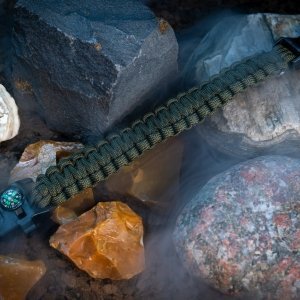
Soldiers wear paracord bracelets because a bracelet is essentially a compact survival rope worn on the wrist, ready to be unraveled in seconds when a critical need arises. Whether it’s applying a tourniquet to a bleeding wound, lashing together a splint for a broken limb, or securing camouflage netting to a vehicle, the cord inside the bracelet provides immediate access to strong, lightweight nylon line.
Paracord, originally named “parachute cord,” owes its name and inception to the airborne units of World War II. Manufactured for parachute suspension lines, this versatile rope quickly became a favorite among military personnel, not just for its original purpose, but for the countless field repairs and survival tasks it could handle once on the ground.
Looking for a reliable paracord bracelet manufacturer for your brand?
Compare factory pricing, MOQ options, and customization details before you commit.
No commitment · Reply within 12h · MOQ from 50 pcs
Post-war, soldiers realized the potential of keeping this cord handy. They began weaving and wearing them as bracelets – an innovation not just for style but primarily for functional benefits. The paracord bracelet, as it became known, was thus born in the trenches, devised as an ingenious way to keep a substantial length of this invaluable cord on their person at all times.
Its use wasn’t just limited to parachute repair. Soldiers found that the inner strands could be used for sewing fabric, fishing, setting snares, or even as makeshift sutures in emergency first aid situations. The outer sheath, robust and durable, could be employed for tasks like building shelters or tying equipment.
Seeing the practical advantages, it wasn’t long before other divisions of the military, beyond just the airborne units, started adopting these tactical bracelets. Special Forces, infantry, and naval units recognized the utility of always having several feet of this multi-purpose cord wrapped around their wrists.
With the growing popularity of the parachute cord bracelet within military ranks, regulations were introduced. The military ensured that the paracord used met specific standards (typically referred to as 550 paracord because of its ability to hold 550 pounds) to maintain uniformity and assurance of quality.
In this section, we have explored the rich history of the paracord bracelet, its military origins, and the reasons behind its rapid adoption among soldiers. The ensuing sections will further explore the continued utility and significance of these bracelets in modern times.
Paracord, often called “550 cord” for its minimum breaking strength of 550 pounds, was originally developed for parachute suspension lines during World War II. Once on the ground, service members would cut the cord from their parachutes and pack it for later use. Today, soldiers carry paracord bracelets as a lightweight, compact way to have emergency cordage always on hand.
The real-world uses are remarkably diverse. Soldiers have used paracord to stem the flow of blood from open wounds or gunshot wounds. Beyond medical emergencies, it serves countless field applications: tying gear together, building shelters, securing camouflage nets to trees or vehicles, and attaching equipment to harnesses. It can be used as a belt, boot laces, a clothesline, an improvised sling, or even trail markers. The inner strands can be removed and used as fishing line, sewing thread for gear repairs, emergency sutures, or floss. Soldiers have also used 550 cord for measuring distances on a map and starting fires. In short, a paracord bracelet is far from a fashion statement, it’s a genuine survival tool.
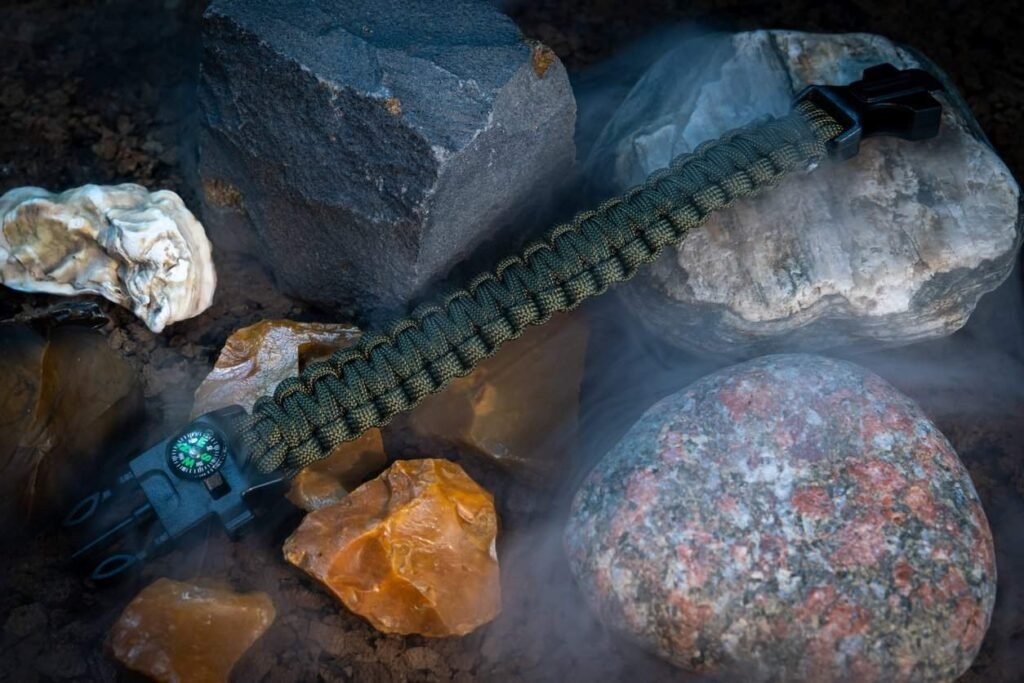
In today’s armed forces, the paracord bracelet is not just a piece of survival gear but also a symbol of a soldier’s readiness and adaptability. It signifies that they are always prepared, even for unexpected challenges that may come their way.
Given the numerous uses of paracord, it’s no wonder that it has found its way into the standard-issue survival kits of many military units worldwide. From creating a makeshift shelter to being used as a tourniquet in emergency situations, the parachute cord bracelet serves as a compact, wearable survival tool.
Many military training programs now incorporate lessons on how to make the most out of paracord in survival situations. Recruits are often taught how to weave their own paracord survival bracelets and are educated about the various situations where the cord can come in handy.
Beyond its functional uses, paracord bracelets have also become a means of personal expression among soldiers. Different paracord bracelet patterns and colors can signify various achievements, and ranks, or simply act as a morale booster. It’s not uncommon to see units sporting unique bracelets that denote their unit’s identity or commemorate a particular mission.
Today’s military, while equipped with advanced technology and gear, still finds value in the simple yet versatile paracord bracelet. Its continued relevance reflects its utility and the ingenuity of the soldiers who first brought it into use.
The official U.S. military specification for paracord is MIL-C-5040H. Within this specification, the most common type used by the military is Type III, also known as 550 cord. Type III paracord has a minimum breaking strength of 550 pounds (250 kg) and a diameter of approximately 4mm (5/32 inch).
Genuine MIL-SPEC Type III 550 cord has a specific construction: a braided outer sheath made of 32 interwoven strands, and an inner core consisting of seven inner cords, each made up of three twisted strands. One of these strands contains a colored tracer or “ID marker” that identifies it as genuine MILSPEC cord. The cord is made from 100% nylon that has undergone a pre-treatment process, and it has a minimum elongation of 30%.
This is where the distinction between MIL-SPEC and commercial 550 cord becomes critical, a distinction that many manufacturers blur. While commercial or utility-grade 550 paracord can look and feel nearly identical to MIL-C-5040 cord, the differences are significant:
It’s worth noting that the MIL-C-5040H specification actually covers six types of paracord, with minimum breaking strengths ranging from 95 lbs to 750 lbs. Type III (550 lb) and Type IV (750 lb) are the most commonly referenced.
For critical applications, especially if the cord might be relied upon in an emergency, genuine MIL-SPEC cord is worth the extra cost. For crafting, bracelets, and everyday projects, commercial-grade 550 cord is more than sufficient. The key is knowing what you’re actually buying, because many products labeled “mil-spec” are, in fact, commercial cord that only meets the strength requirement, not the construction or material specifications.
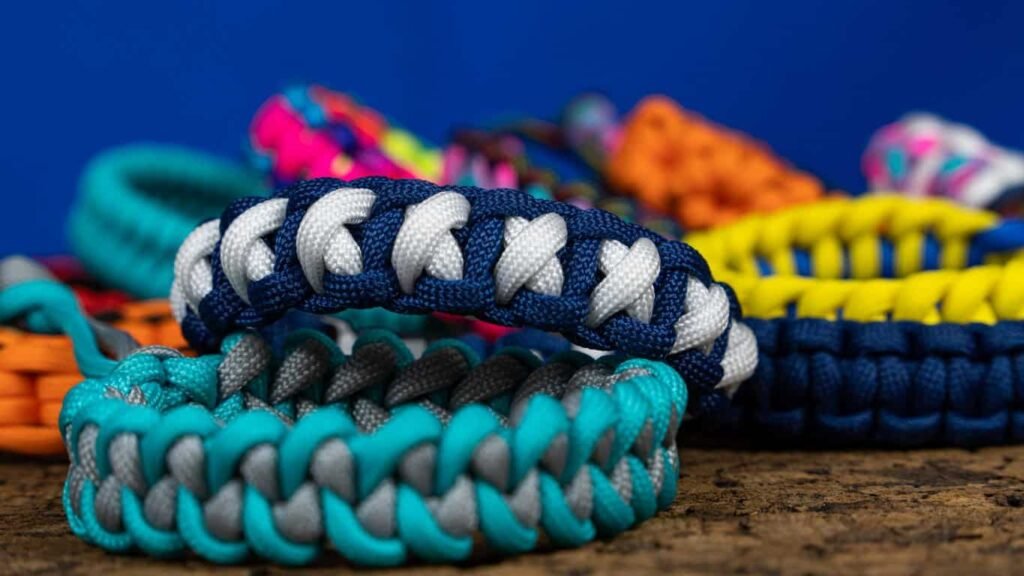
In many military circles, the paracord bracelet has transcended its original survival utility to become a badge of honor. Soldiers wear them as a reminder of their training, camaraderie, and the challenges they’ve overcome. For many, it’s akin to a rite of passage, showcasing their belonging to an elite group trained to survive against all odds.
The popularity of the paracord survival bracelet isn’t limited to the military. Inspired by soldiers, many civilians have adopted these bracelets, drawn both by their utility and the symbolism they carry. This has led to a surge in DIY tutorials, with enthusiasts sharing paracord bracelet instructions online and creating their unique designs.
Fashion industries haven’t remained oblivious to the rising trend either. Many fashion-forward brands have incorporated the rugged aesthetics of the Paracord bracelet into their collections, melding style with the bracelet’s inherent functionality.
Popular media, including movies, TV shows, and novels, have also played a role in popularizing the Paracord bracelet. Action heroes and survivalists are often portrayed wearing these bracelets, further embedding them as symbols of resilience, readiness, and resourcefulness.
The cultural impact of the paracord bracelet is undeniable. From being a vital survival tool for soldiers to becoming a fashion and cultural icon, its journey shows its versatility and enduring appeal.
Need help choosing the right paracord bracelet style for your market?
Get a custom quote based on your quantity, size, and packaging needs.
✓ Free samples available ✓ Custom logo & packaging ✓ ISO-certified factory
The rise in the popularity of the paracord bracelet has ushered in innovative advancements. Today, some models integrate small tech gadgets, like USB drives or even mini LED flashlights, combining traditional survival utility with modern needs.
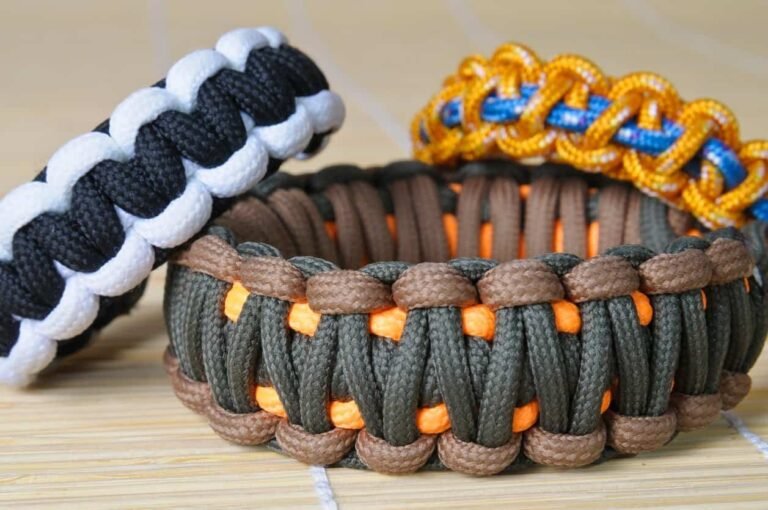
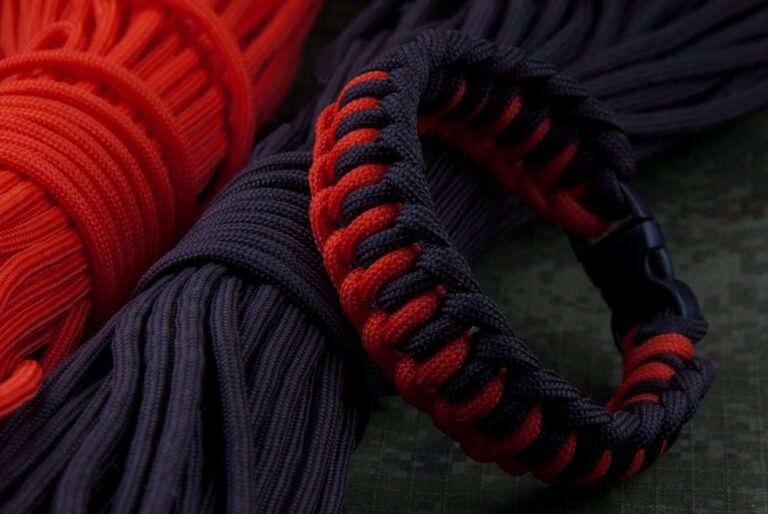
From the basic cobra weave to more intricate patterns like the trilobite or king cobra, the variety in paracord bracelet patterns has expanded immensely. This not only allows wearers to choose a design that resonates with their aesthetic preferences but also can offer different levels of cordage based on the weave’s complexity.
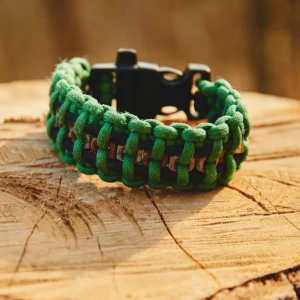
Some paracord survival bracelets have taken the survival aspect a notch higher by incorporating miniature tools. This might include a small knife, a whistle, a compass, or even a fire starter, ensuring that wearers have a mini survival kit on their wrist at all times.
Understanding the community’s desire to personalize, many companies now offer paracord bracelet kits. These DIY kits allow enthusiasts to craft a bracelet tailored to their preferences, from color choices to added functionalities.
The evolution in design and the introduction of varied functionalities highlight the paracord bracelet’s adaptability. Whether one is a survival enthusiast, a soldier, or just someone looking for a functional accessory, there’s a paracord bracelet out there tailored for every need.
The amount of paracord in a bracelet varies depending on the weave pattern and wrist size, but there’s a widely used rule of thumb: one inch of bracelet length requires approximately one foot of paracord. So for an average adult wrist of about 8 inches, a standard cobra-weave bracelet contains roughly 8 to 10 feet of cord.
However, this is just a baseline. Different weave patterns consume vastly different amounts of cord. A simple cobra weave for an 8-inch wrist might use 8–10 feet, while a King Cobra weave (a double-layer cobra) for the same wrist can require 25 feet. Other patterns like the Trilobite weave need 16–20 feet. Some commercially sold survival bracelets contain approximately 11.5 feet of cord-, while others may contain up to 14 feet.
For a more precise estimate, crafters often use the formula: wrist size (in inches) × a ratio between 1 and 1.25, depending on the chosen weave–. It’s always wise to add a little extra cord to ensure you don’t run out mid-project.

For soldiers, the paracord bracelet isn’t just a handy tool. It’s a symbol of camaraderie and brotherhood. When soldiers serve together, they form bonds that are difficult to describe. Having a paracord bracelet, often made by a fellow soldier or loved one, serves as a tangible representation of that bond.
In some units, soldiers wear a paracord bracelet as a tribute to fallen comrades. Each knot or bead might represent a specific event or individual, making the bracelet a powerful reminder of the sacrifices made and the importance of their mission.
Certain elite military groups have specific paracord bracelet patterns or colors to identify members. This is not just about exclusivity but reflects the rigorous training, dedication, and unique skills they possess.
At its core, a paracord survival bracelet is about being prepared. Soldiers, who constantly train for unpredictable scenarios, wear it as a sign of their always-ready mindset. It’s a silent statement that they’re equipped to handle emergencies, whether with the tools embedded in the bracelet or just with the cord itself.
In the military, every piece of gear has a purpose. While the practical benefits of the paracord bracelet are undeniable, its symbolic weight carries profound significance for many soldiers. It’s more than just a woven parachute cord; it’s a badge of honor, commitment, and brotherhood.
Yes, civilians can absolutely purchase genuine MIL-SPEC paracord. The same MIL-C-5040H specification cord used by the U.S. military is readily available to the public through numerous retailers. Many manufacturers produce cord that is 100% compliant with MIL-C-5040H and made by certified U.S. government contractors.
However, there’s an important distinction to understand: military specification (MIL-SPEC) versus commercial grade. Commercial-grade 550 paracord can look and feel nearly identical to MIL-SPEC cord. The key differences lie in quality control and materials, MIL-C-5040H requires specific pre-treatment of the nylon and that each core strand be made of three twisted plies. Genuine MIL-SPEC cord also includes an identification tracer strand and adheres to tighter tolerances on strand count and sheath weave.
MIL-SPEC paracord is available for purchase in various lengths, from 25-foot hanks up to 1,000-foot spools–, and in authentic military colorways like olive drab, coyote brown, and black. While commercial-grade cord is perfectly adequate for most civilian uses and comes in a much wider spectrum of colors, anyone who wants the exact same cord the military uses can buy it from numerous online and physical retailers without any special restrictions.
Q1: What is a paracord bracelet primarily made of?
A: A paracord bracelet is made from parachute cord, a lightweight nylon rope initially used in the suspension lines of parachutes.
Q2: How can soldiers use a paracord bracelet in survival situations?
A: Soldiers can unravel the bracelet to use the cord for tasks like setting traps, fishing, tying gear, or even as a makeshift tourniquet in emergencies.
Q3: Do all soldiers wear paracord bracelets?
A: No, not all soldiers wear them. However, many choose to due to their practicality in survival scenarios and their symbolic significance.
Q4: Are there different types of paracord bracelets?
A: Yes, there are different patterns, designs, and types, some even come integrated with additional survival tools like firestarters or whistles.
Q5: Can civilians purchase and wear military-style paracord bracelets?
A: Absolutely! Many outdoor enthusiasts, survivalists, and even everyday individuals wear paracord bracelets for their utility and style.
Paracord bracelets, originally crafted for practical purposes, have taken on a deep symbolic significance, especially among soldiers. Beyond their undeniable utility in survival situations, these bracelets embody values of preparedness, unity, and remembrance. For the soldiers who wear them, they aren’t just accessories; they’re badges of honor. For the rest of us, they’re a small glimpse into the life, challenges, and bonds formed in the military. Today, that same spirit has carried over into custom paracord products, allowing anyone to personalize bracelets with unique colors, weaves, and meaningful add-ons, whether as a tribute, a gift, or a personal statement. Whether you wear one for its tactical advantages, its aesthetic appeal, or both, one thing is clear: the paracord bracelet has woven itself into the fabric of military and civilian life alike.
Ready to source paracord bracelets?
Tell us your target quantity, product style, and packaging requirements.
we’ll send you a detailed bulk quote within 12 hours.
ISO 9001 certified · Direct factory pricing · Custom OEM available