Request a Quote
Tell us your product type, quantity, logo requirements, packaging needs, and destination country. Our team will reply within 12 hours with MOQ, pricing, lead time, and shipping options.
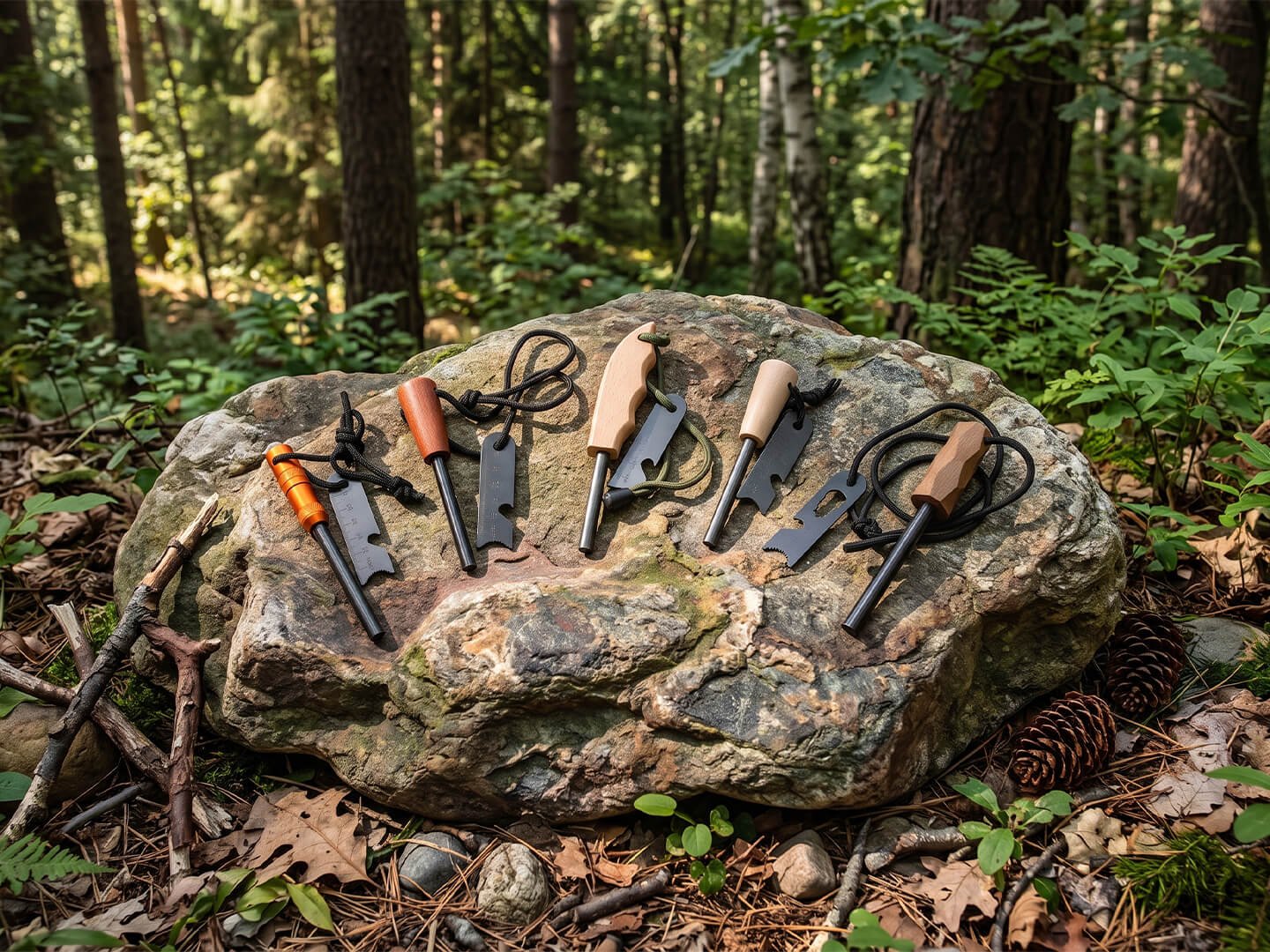
To source wholesale fire starter kits efficiently, work backward from your retail price and your target strike count. A supplier offering MOQ from 50 pcs per SKU, samples within 7 working days, and production at 7–15 working days gives you enough flexibility to test three or four configurations before committing to a container. Confirm the ferro rod diameter first: a 5 mm rod delivers around 3,000 strikes, an 8 mm rod approximately 6,000 strikes, a 12 mm rod around 10,000 strikes, and a 25 mm rod 20,000+ strikes. Everything else, including handle material, tinder type, packaging, and branding, is a cost and positioning decision layered on top of that core specification.
This guide covers the full procurement sequence: kit composition, ferro rod specifications, materials and construction, private label and OEM programs, MOQ and pricing structures, importing from China, quality control, and buyer scenarios. Each section is written from the purchasing manager’s side of the table, because the questions that decide whether a program succeeds are commercial, not technical.
Looking for a reliable ferro rod manufacturer for your brand?
Compare factory pricing, MOQ options, and customization details before you commit.
No commitment · Reply within 12h · MOQ from 50 pcs
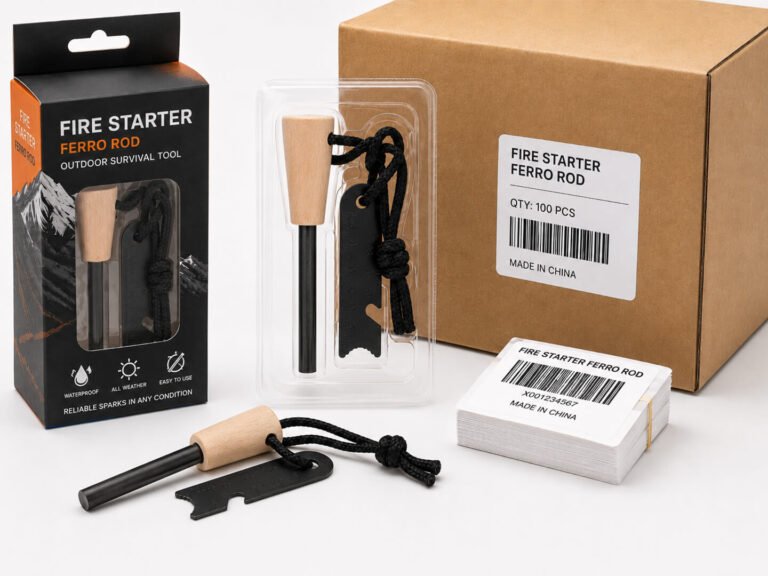
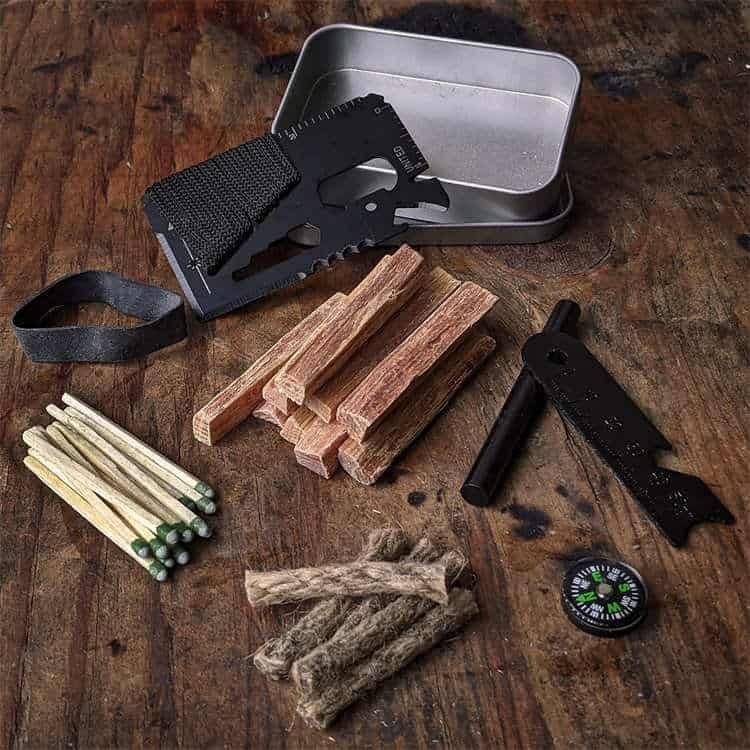
A wholesale fire starter kit is a configured set of ignition components assembled for retail, promotional, or institutional resale. Every functional kit contains four elements: a ferrocerium rod, a striker or scraper, a tinder component, and a retention system such as a lanyard, handle, or pouch. Remove any one of those and the kit either fails in the field or forces the end user to substitute a component, which is the most common source of negative product reviews in this category.
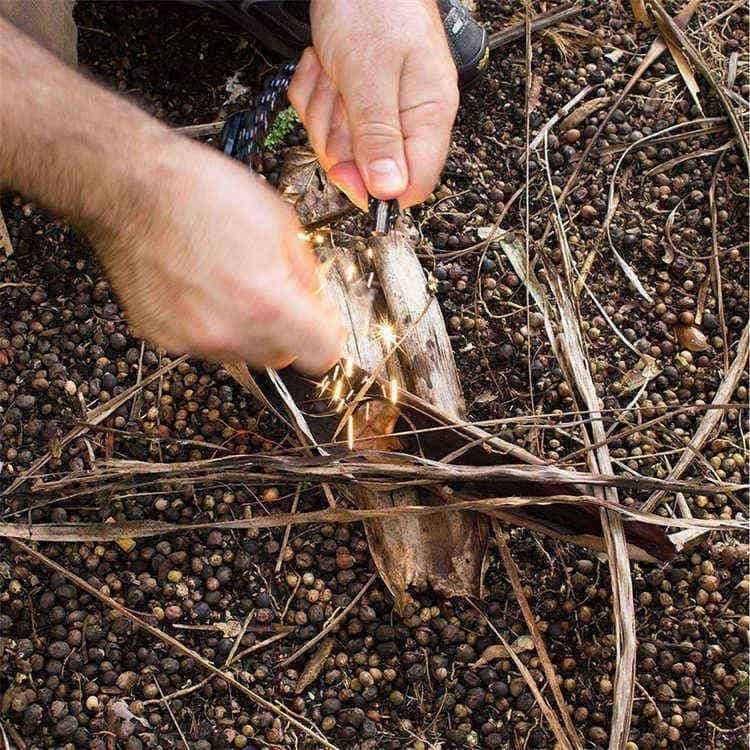
The ferro rod is the ignition source and the only component that wears out through normal use. The striker removes material from the rod at high speed, generating sparks at approximately 3,000 degrees Celsius. Tinder catches those sparks and converts them into a sustained flame. The retention system keeps the assembly together and determines how the product is presented on a shelf or in a marketplace listing.
Configurations divide into three rough tiers. Entry-level camping kits typically pair an 8 mm rod with a wood or paracord handle, a single high-carbon steel striker, and two waxed jute tinder ropes. Mid-tier kits add a multi-function striker with a bottle opener and map scale, a longer rod, and a carrying pouch. Premium bushcraft and survival kits move to a 12 mm rod, include a ferro rod blank as a spare, add fatwood or impregnated cotton tinder, and package everything in a MOLLE-compatible tactical pouch.
For a buyer, the composition decision drives three outcomes: landed cost per unit, retail price band, and return rate. Adding low-value components raises assembly cost without raising perceived value. Omitting tinder reduces the product to a spark generator and pushes the end user toward a competitor’s kit that works out of the box. The practical rule is to include at least one tinder component rated for 20 minutes of burn time, and to choose the rod diameter based on how often the end user expects to light a fire rather than how impressive the number looks on packaging.Kit dimensions also matter for channel fit. A kit destined for a big-box outdoor retailer needs a hang tag and a footprint that fits a standard pegboard hook. A kit destined for a subscription box needs to fit within a fixed carton dimension. A kit destined for corporate gifting needs a presentation box that survives courier handling. These constraints should be settled before sampling, because they affect packaging tooling and therefore cost.
Ferro rod diameter is the single most consequential specification in a fire starter kit. It determines strike count, service life, retail price band, and how much surface area is available for branding. The table below covers the four standard diameters used across bulk fire starter kits and private label programs.
| Rod Diameter | Typical Length Range | Approximate Strike Rating | Approximate Service Life (Regular Camper) | Typical Application |
| 5 mm | 60–80 mm | Around 3,000 strikes | Approximately 1–2 years | EDC kits, keychain tools, low-cost bundles |
| 8 mm | 80–100 mm | Approximately 6,000 strikes | Around 3 years | General camping, hiking, standard retail kits |
| 12 mm | 100–127 mm | Around 10,000 strikes | Approximately 5–7 years | Bushcraft, survival kits, premium private label |
| 25 mm | 200–255 mm | 20,000+ strikes | 10+ years | Expedition kits, institutional supply, heavy-use buyers |
The around 3-year service life figure for an 8 mm rod assumes a regular camper striking the rod several times per trip across a normal outdoor season. A 5 mm rod is not a lower-quality product; it is a smaller one. It produces sparks at the same temperature but consumes its cross-section faster per strike. That distinction matters when a buyer is comparing quotes, because a supplier offering a 5 mm rod at a lower price is not undercutting an 8 mm quote; it is quoting a different product.
The 8 mm diameter is the volume workhorse for Amazon sellers and outdoor brands. It supports a mid-range retail price, delivers enough strikes for multi-season use, and offers sufficient handle surface for laser-engraved branding without looking undersized next to competing products on a shelf. The 12 mm diameter suits buyers targeting bushcraft and preparedness audiences who treat strike count as a headline specification. The 25 mm diameter is rarely a retail item; it is sold to institutional buyers, outfitters, and training organizations where the rod is a consumable tool rather than a consumer product.
Three specification details deserve verification beyond diameter. First, surface treatment. An anti-oxidation coating protects the rod during storage and sea freight, where humidity exposure is prolonged and uncoated rods can degrade before they reach the retailer. Second, lanyard hole construction. A precision-drilled hole indicates tighter manufacturing tolerance than a punched hole and reduces the risk of handle cracking during assembly. Third, alloy grade. If your target market includes cold-weather use, request the alloy composition in writing and confirm spark output is maintained below freezing.
Strike ratings are approximations, not guarantees. Technique, tinder quality, and ambient humidity all affect how many strikes a rod delivers before it becomes too short to use. Treat the table above as a specification band for comparing suppliers, and hold your factory to the band they quote rather than a specific figure.
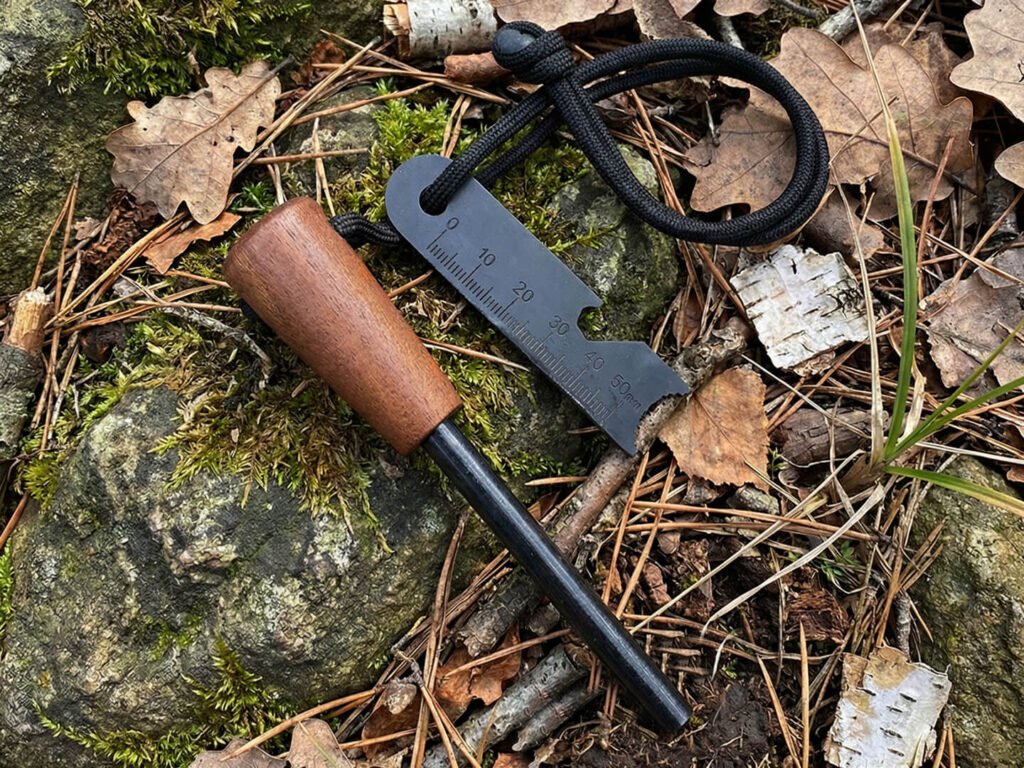
Ferrocerium is a rare-earth alloy that oxidizes rapidly when scraped, producing sparks hot enough to ignite dry tinder. Two variables affect field performance: alloy consistency and rod density. A rod with uneven alloy distribution produces erratic spark showers: strong on one strike, weak on the next. This is a process control issue rather than a raw material cost issue, which is why supplier qualification matters more than raw material price shopping.
Handle material affects durability, tactile quality, and branding capacity. Natural wood handles offer the largest laser-engraving area and a premium feel, but they require moisture sealing for humid climates and can crack if the rod is stored wet. Paracord-wrapped handles add grip texture, allow color customization at low cost, and serve a secondary survival function because the cordage can be unwound for shelter building or gear repair. Aluminum handles support knurled finishes and integrated features such as a screw-in rod connection or a recessed compass, but they offer less engraving surface and add weight.
Striker construction is frequently underestimated during sourcing. A high-carbon steel striker with a hardened edge removes ferrocerium efficiently and produces a consistent spark shower. A soft steel striker requires more force and yields shorter spark duration, which end users perceive as a defective product. For multi-tool strikers, verify that the tinder scraper section is sharp enough to shave fatwood or waxed jute. A blunt scraper forces the end user to carry a separate knife, which undermines the value proposition of an integrated kit.
Tinder selection affects perceived quality more than any other component. Waxed jute rope is inexpensive, reliable, and easy to source in consistent quality. Fatwood shavings offer a longer burn and a natural aesthetic that suits premium positioning. Impregnated cotton pads are compact and light but can dry out if packaging is not sealed. Whichever tinder you specify, confirm that it ignites from a ferro spark without additional accelerant. This is testable and should form part of your pre-shipment inspection protocol.
Retention hardware is where cost reduction usually shows up first. A thin lanyard cord, a plastic snap hook, or an undersized pouch will fail before the ferro rod wears out, and the end user will blame the product rather than the component. Specify cord diameter, hook load rating, and pouch stitching density in the purchase order. If a supplier cannot confirm these details in writing, the saving is not worth the return rate.
Finally, confirm the intended striking technique matches your kit design. The standard method is to hold the striker still and pull the rod back with tinder positioned under the spark path. Kits designed around a push-strike motion require different handle geometry and a different striker angle. If your packaging instructs one method but the kit is designed for the other, you will see returns for reasons that have nothing to do with material quality.
A private label fire starter kit is an existing kit configuration manufactured under your brand rather than the factory’s. The components, dimensions, and assembly method stay the same; the logo, packaging, and documentation change. This is the fastest route to market because it avoids tooling investment and typically moves from artwork approval to production in a single cycle.
The custom fire starter kit route is broader. It can involve a new handle profile, a proprietary striker design, a bespoke tinder format, or a completely new packaging structure. Custom OEM work requires tooling, which adds cost and lead time, but it produces a product that cannot be price-matched by a competitor selling the same factory catalogue item.
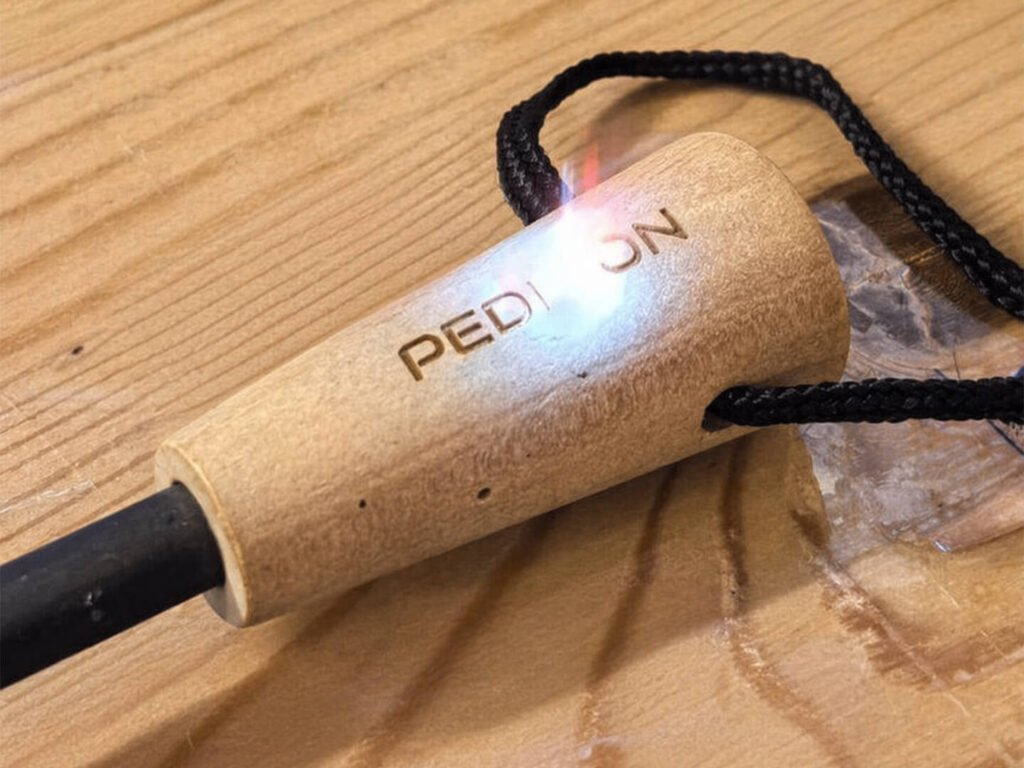
Logo application methods vary by handle material and order volume. Laser engraving on wood delivers a permanent, high-contrast mark and works well at volumes from 50 pcs upward. Pad printing suits aluminum and plastic handles but can wear with heavy use. Embossed logos on leather or rubberized handles offer a premium tactile finish. Woven labels and heat-transfer tags work for pouches and packaging rather than the rod itself. The right method depends on your price band: engraving signals durability, pad printing signals value, and embossing signals premium positioning.
Packaging options follow a similar tiering. Poly bag with a header card is the lowest-cost option and suits Amazon FBA and marketplace listings. Blister packaging supports retail pegboard display but requires tooling and a minimum volume. Kraft gift boxes with a printed sleeve work for corporate gifting and subscription boxes. MOLLE-compatible tactical pouches support premium outdoor retail and allow the pouch itself to carry branding.
Artwork requirements are straightforward but worth confirming early. Most factories need vector files, a defined Pantone reference, and a dieline for any printed packaging. Allow time for a physical pre-production sample if your branding includes tight registration or multiple colors. Reviewing a digital proof is not the same as reviewing a printed box under retail lighting.
Amazon FBA preparation is a specific service worth asking about during supplier evaluation. It includes poly bagging, suffocation warning labels, FNSKU barcode application, and carton labeling to Amazon’s specification. A supplier that handles FBA prep removes a step from your fulfillment workflow and reduces the risk of inbound rejection at the warehouse. If you sell on Amazon, confirm this capability before you place a production order rather than after.
For buyers running multiple SKUs, private label programs also allow you to differentiate the same underlying product across price tiers. An 8 mm rod with a paracord handle and a kraft box can sit at one price point; the same rod with a laser-engraved wood handle and a tactical pouch sits at another. The manufacturing cost difference is modest, but the retail positioning difference is substantial.
MOQ is the first question most buyers ask and the one most likely to be answered vaguely. A workable starting point is MOQ from 50 pcs per SKU for standard configurations. That threshold allows a new brand to test three or four variations without tying up capital in inventory it cannot move, and it allows an established buyer to add a seasonal SKU without a full production commitment.
Pricing scales with volume, but the curve is not linear. The largest cost reductions occur between prototype and first production run, because setup, tooling, and artwork preparation are one-time costs. Beyond that, unit cost decreases incrementally as material purchasing and assembly efficiency improve. A buyer comparing quotes at 500 pcs and 5,000 pcs should expect a meaningful gap, but a buyer comparing 5,000 pcs and 50,000 pcs should expect a smaller one.
The main cost drivers, in rough order of impact, are ferro rod diameter, handle material, striker complexity, tinder type, and packaging. An 8 mm rod with a paracord handle and a poly bag costs substantially less than a 12 mm rod with a wood handle, a multi-tool striker, fatwood tinder, and a printed gift box. When a quote comes in below expectation, the explanation is almost always in one of those five variables rather than in the factory’s overhead.
Sampling should be treated as a paid step rather than a free courtesy. Samples within 7 working days is a reasonable benchmark for standard configurations, and it gives you enough time to test spark output, handle feel, tinder ignition, and packaging durability before committing. Test the sample the way an end user would: strike it wet, strike it cold, and try to ignite the included tinder with nothing but the kit.
Production at 7–15 working days is achievable for standard kits once artwork and samples are approved. Custom tooling extends that timeline, and peak season, typically late summer and early autumn ahead of the holiday retail cycle, can add delay. Build your reorder point around the upper end of the production window plus shipping time, not the lower end.
Payment terms vary by supplier relationship and order size. New buyers should expect a deposit with the balance due before shipment. Established buyers with a track record can often negotiate partial payment against shipping documents. If a supplier demands full prepayment on a first order with no inspection rights, treat that as a signal about how the relationship will operate when something goes wrong.A realistic landed cost calculation includes unit cost, packaging, branding, freight, duties, and inspection fees. Buyers who compare only unit cost frequently discover that a cheaper quote with a heavier box or a less efficient carton configuration costs more per unit landed. Ask for carton dimensions, carton weight, and units per carton before you finalize the comparison.
✓ Free samples available ✓ Custom logo & packaging ✓ ISO-certified factory
Importing fire starter kits follows the same structure as importing most consumer outdoor goods, with a few category-specific considerations. The process is well documented, and the procedural detail is covered in depth in how to import fire starter kits from China. What follows is the buyer-side summary.
DDP shipping is the simplest option for new importers. Under Delivered Duty Paid terms, the supplier handles export clearance, freight, import duties, and final delivery to your address or to an Amazon fulfillment center. You receive a single landed cost and no customs paperwork. The trade-off is less visibility into the freight component and less control over carrier selection.
FOB terms give you more control and typically a lower headline price, but they require you to arrange freight forwarding, customs brokerage, and inland transport. For buyers moving consistent volume, FOB often produces a better total cost. For buyers testing a first order, DDP removes friction and reduces the risk of a customs delay derailing a launch.
Documentation requirements are standard: commercial invoice, packing list, bill of lading or air waybill, and a certificate of origin where applicable. Fire starter kits do not generally fall into a restricted category, but ferrocerium is a metal alloy and some carriers apply additional screening. Confirm the shipping method accepts the product before the order is packed, not after.
A factory in Jiangmen, China offers a practical logistical advantage. Jiangmen sits in the Pearl River Delta, within reasonable drayage distance of the major southern ports, which shortens inland transit and reduces the risk of damage during the leg between factory and vessel. For buyers on the west coast of North America or in Europe, that translates into predictable transit times rather than best-case estimates.
Supplier tenure is a useful screening filter. A manufacturer operating since 2010 has weathered at least two full cycles of raw material price volatility, container rate spikes, and regulatory changes affecting export documentation. That history does not guarantee quality, but it does indicate the business can absorb disruption without disappearing mid-order.Plan your first import around a full production and shipping cycle rather than a launch date. Production at 7–15 working days plus ocean transit plus inland delivery typically means 30–50 days from purchase order to warehouse receipt, depending on destination. Air freight compresses that timeline at a higher cost per unit. Build the calendar backward from your retail launch and decide which trade-off you can accept.
Quality control in this category rests on three layers: material verification, in-process inspection, and pre-shipment testing. A supplier holding ISO 9001 certification (cert. no. UQ251970R1) has documented procedures for all three, which means your inspection protocol can reference an existing system rather than ask the factory to build one.
Material verification starts with the ferro rod. Request the alloy grade, confirm the diameter and length against the approved sample, and check surface treatment for consistency. For handles, verify material grade, finish, and color against the approved standard. For strikers, confirm steel type and edge hardness. These checks should happen before assembly, because a defect caught at the component stage costs less to correct than one caught in a finished kit.
In-process inspection covers assembly accuracy. Are the correct components being paired? Is the lanyard attached with the specified knot and cord diameter? Is the tinder quantity consistent across units? Assembly errors are the most common defect category in multi-component kits, and they are also the easiest to prevent with a simple visual checklist at the assembly station.
Pre-shipment testing is where you protect your return rate. A functional test should confirm that the striker produces a spark from the rod on the first or second attempt, and that the included tinder ignites from that spark without additional accelerant. A packaging test should confirm that the kit survives a drop and that any printed material is legible and correctly positioned.
Defect classification keeps inspection proportionate. Critical defects, such as a rod that will not spark, a missing striker, or a tinder component that will not ignite, justify rejection of the affected units. Major defects, such as a misaligned logo or a loose lanyard, may justify rework. Minor cosmetic variations should be accepted within a defined tolerance rather than treated as failures, or inspection becomes uneconomical.
Third-party inspection is worth the cost on first orders and on any order where you have changed a component or a supplier. An inspector on site before shipment catches problems while they are still fixable, rather than after the container has sailed. For repeat orders with a stable supplier, a documented internal protocol with periodic third-party verification is usually sufficient.Ask for inspection records, not just inspection claims. A supplier that can produce material certificates, in-process check sheets, and pre-shipment test results is operating a system. A supplier that can only confirm verbally that quality is good is asking you to absorb the risk.
Outdoor retailers buy kits that align with their existing camping and hiking assortment, favoring an 8 mm rod in a mid-range price band with packaging that fits standard pegboard display. Their priority is sell-through rate, which means the kit must work out of the box and photograph well for both shelf and online listings.
E-commerce sellers buy for margin and review performance. Their priority is a product that arrives intact, works as described, and generates positive reviews. This group tends to favor the 8 mm diameter because it hits a price point that converts while delivering a strike count that satisfies buyer expectations. Amazon FBA prep capability matters more to this group than to any other, because inbound compliance failures cost both time and money.
Promotional product distributors buy on customization flexibility and delivery reliability. Their priority is the ability to apply a client logo to a fixed deadline, often in small quantities across multiple colorways. MOQ from 50 pcs is the threshold that makes this channel workable, because promotional orders rarely reach the volumes of a retail program.
Emergency preparedness buyers purchase in household quantities and prioritize compactness, reliability, and clear instructions. Their kits often favor a 5 mm or 8 mm rod in a sealed pouch, with tinder that has a long shelf life. Documentation quality matters more here than in any other channel, because the end user may be relying on the instructions rather than prior experience.
Subscription box operators buy on unit cost, dimensional fit, and novelty. Their priority is a kit that fits a fixed carton and feels like value at the moment of unboxing. A kit with a distinctive handle color, a compact pouch, or an unusual tinder format performs better in this channel than a generic configuration.
Institutional buyers, including outfitters, training organizations, and agency supply, buy on durability and strike count. Their priority is a rod that survives heavy use across many users. The 12 mm and 25 mm diameters exist for this channel, and price sensitivity is lower because the product is treated as equipment rather than a gift.
Corporate gifting buyers purchase on presentation and branding surface. Their priority is a box that looks considered and a handle that carries a logo legibly. Laser-engraved wood handles perform well here, as do kits packaged in a rigid box with a printed sleeve.
A buyer running more than one channel can serve all of them from a single supplier by varying three variables: rod diameter, handle material, and packaging. The underlying manufacturing process stays the same, which keeps tooling cost low while allowing distinct retail positioning across channels. If you are consolidating suppliers across several of these channels, the evaluation framework in how to choose a fire starter kit manufacturer is worth reviewing before you shortlist.
Sourcing wholesale fire starter kits comes down to settling five variables in order: rod diameter, handle material, tinder type, packaging format, and branding method. Once those are fixed, MOQ from 50 pcs, samples within 7 working days, and production at 7–15 working days give you a workable first order cycle. Confirm the strike rating band you are buying (around 3,000 strikes at 5 mm, approximately 6,000 at 8 mm, around 10,000 at 12 mm, and 20,000+ at 25 mm) and hold your supplier to it.
For bulk fire starter kits and private label programs, the two biggest risks are under-specified components and inspection gaps. Specify cord diameter, striker steel, tinder burn time, and packaging dimensions in writing. Inspect on the first order and periodically thereafter. A supplier operating under ISO 9001 (cert. no. UQ251970R1), manufacturing since 2010, and shipping DDP from Jiangmen can absorb most of the operational complexity, but the specification decisions remain yours.
If you are ready to compare configurations and request samples, start with the current wholesale fire starter kits range, and review the bulk ferro rods options if you are sourcing components separately for assembly.
Q: What’s included in a wholesale fire starter kit?
A: A typical kit includes an 8 mm ferro rod (around 6,000 strikes), a steel striker, and optional tinder, a paracord lanyard, and a handle. All components are customisable for private label.
Q: What’s the MOQ for bulk fire starter kits?
A: Factory-direct MOQs commonly start around 50 pcs per specification, with tiered pricing at higher volumes. Survfire’s MOQ is from 50 pcs.
Q: Can I private label a fire starter kit?
A: Yes: OEM logo engraving on the ferro rod, custom retail packaging, and branded instruction cards. Survfire supports full custom OEM logo and packaging.
Q: How many strikes does the ferro rod deliver?
A: Around 6,000 strikes for the standard 8 mm rod; roughly 3,000 (5 mm), 10,000 (12 mm), and 20,000+ (25 mm). A ferro rod lasts a typical camper around 3 years.
Q: What are the sample and production lead times?
A: Samples ship within 7 working days and production runs 7–15 working days at Survfire.
ISO 9001 certified · Direct factory pricing · Custom OEM available